- Infinite White Space
- Posts
- Books I Loved in 2025
Books I Loved in 2025
An assortment of horror, poetry, and graphic novels

Andrea Blythe
January 13, 2026
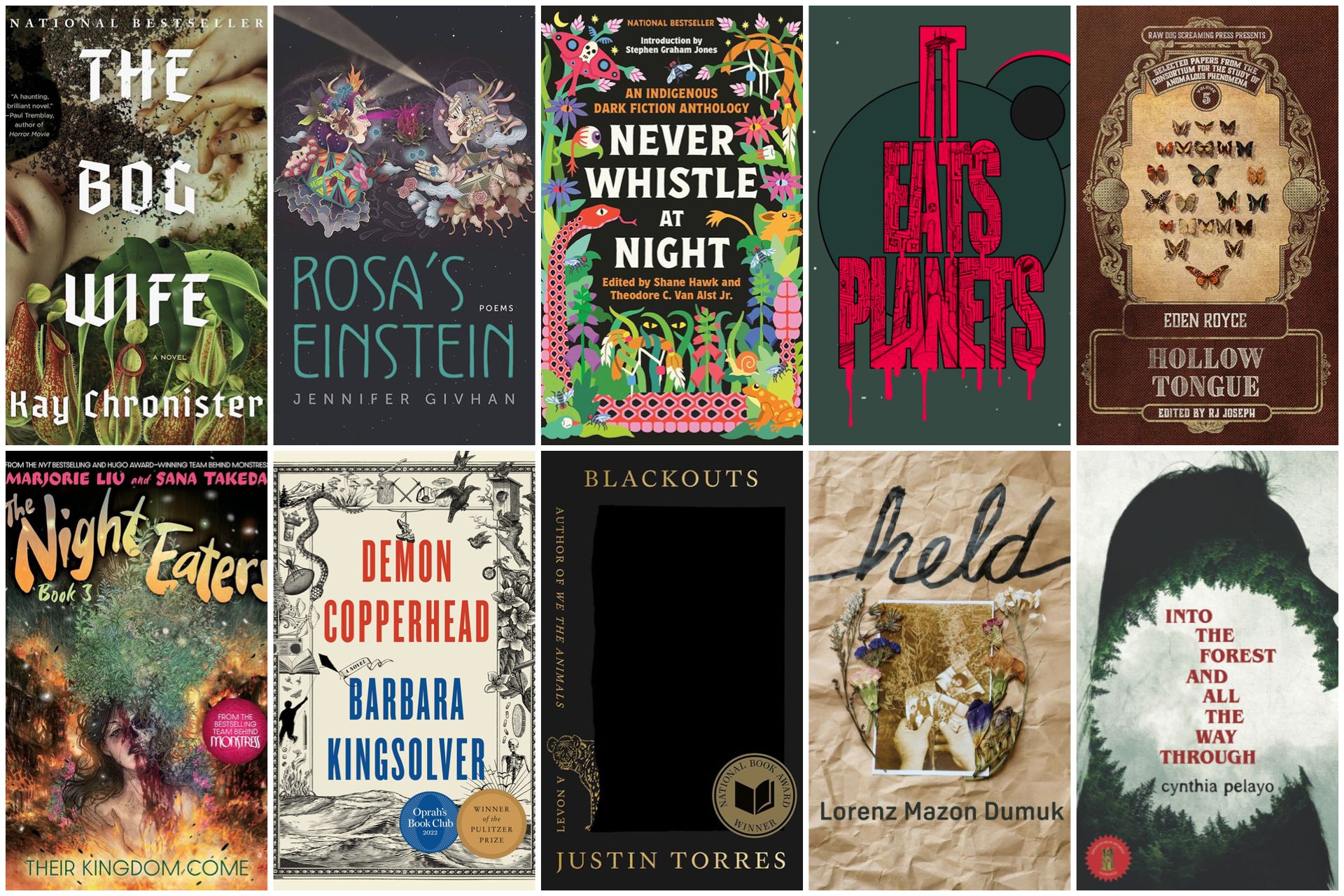
As 2025 came to a close, I tallied my final reading count at 47 finished books, with three books in progress (Sunrise on the Reaping by Suzanne Collins, The Long Game: How to Be a Long-Term Thinker in a Short-Term World by Dorie Clark, and Tao Te Ching by Lao Tzu). So many great reads this year, including some genre-bending, experimental work that scratched my brain in all the right ways.
Fiction
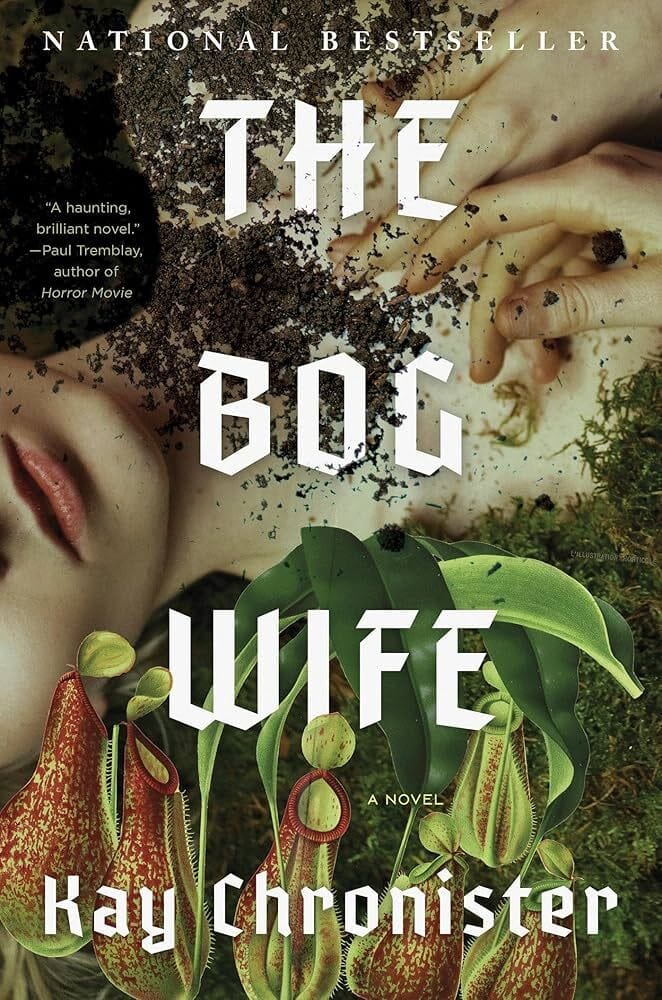
The Bog Wife by Kay Chronister is the stunning story of a family weighed down and haunted by its traditions. The Haddesley are infamous recluses in their community. Secretly, they live in communion with the bog under a kind of pact — in exchange for tending to and caring for the bog, the eldest male of each generation is presented with a bog wife, who is pulled up from the mire to ensure that the Haddesley bloodline remains pure. As their father is ailing and ready to breath his last, the siblings come together to prepare for his passing and the ritual of welcoming the new bog wife.
Shifting between each of the five siblings’ point of views, the novel weaves an intricate knot of generational abuse and trauma. Each sibling is so distinctly broken, with their own ideas on how to make things right and heal themselves, leading them to wound each other all over again. The Bog Wife is an aching portrayal of family, home, and the expectation of magic. And in the end, it broke my heart in every way possible.
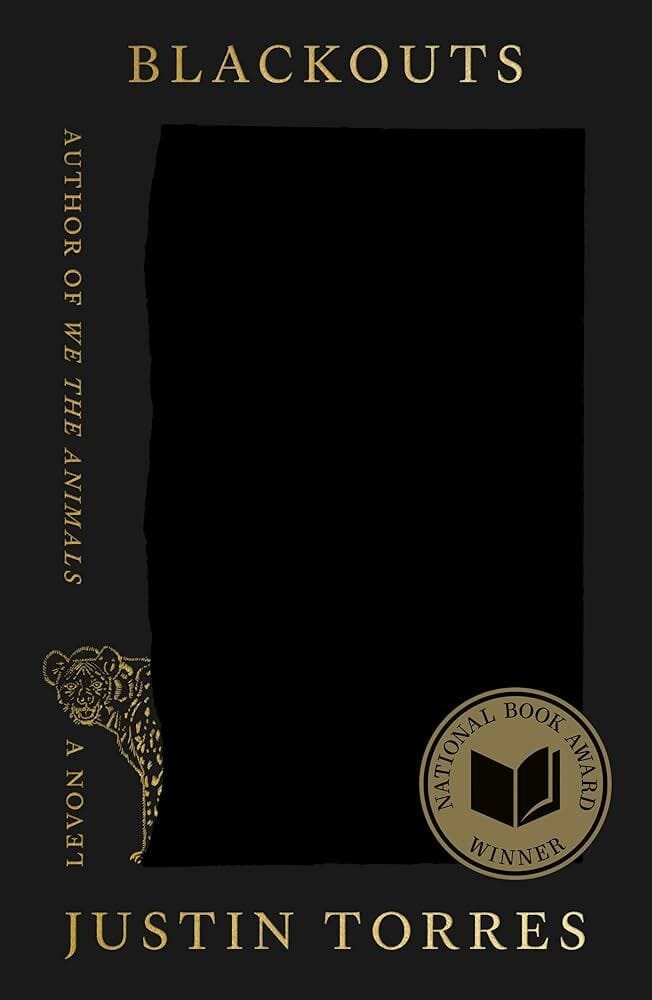
In Blackouts by Justin Torres a young man journeys to the Palace, a nursing home, to reconnect with an old acquaintance, Juan Gay, a man he met years before while housed at an institution. As the young man tends to Juan in his dying days, he shares his story, describing his youthful disillusionment as a gay man and his experience of the electrical and psychological blackouts that led him to this place. In return, Juan shares pieces of his own personal journey and passes along a passion project (comprising a series of blackout poems created by an unknown poet), urging the young man to continue his work. Written in short, poetic vignettes interspersed with a collection of blackout poems created from the pages of a real document, Sex Variants: A Study of Homosexual Patterns, along with a selection of photographs and artwork, Blackouts is a beautiful and compelling mixed-media novel.
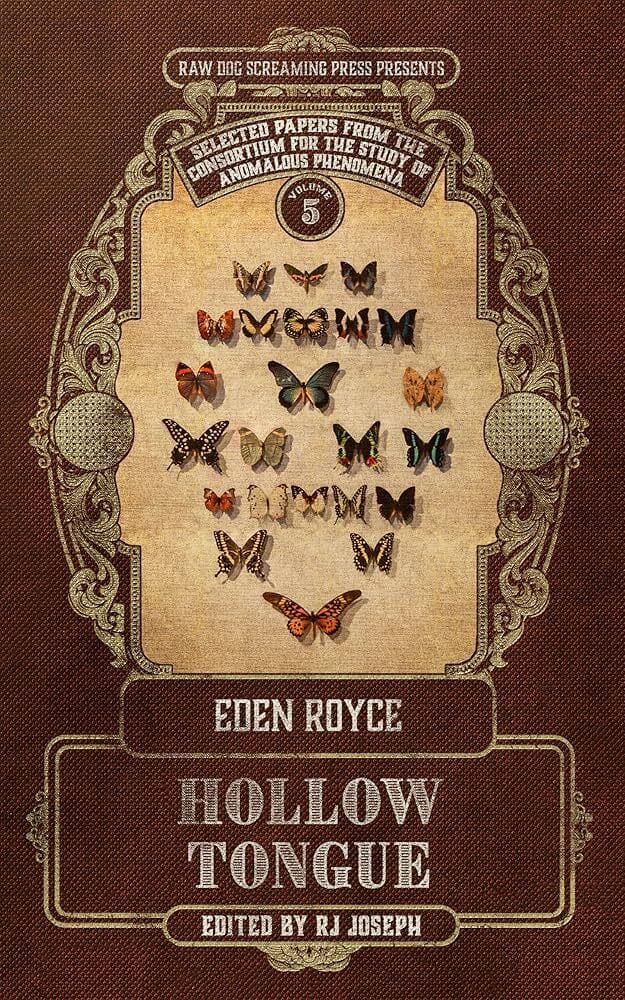
Maxine returns to her family home, hoping to use the time to get back on her feet after losing her job. Although she remembers her father’s verbal abuse that both she and her mother endured, she has grown as an adult and believes she can finally stand up to her father, especially since her mother has already escaped and moved on. The house she returns to is mostly as she remembers, but older with signs of mold and disrepair — and notably with no sign of her father. Wandering alone through the empty rooms, she faces the past and begins to sense that something is terribly, terribly wrong. Eden Royce’s horror novella, Hollow Tongue, presents a quiet, unsettling solitude that builds to a truly horrifying end.

Barbara Kingsolver’s Demon Copperhead is a modern retelling of the classic Charles Dickens novel David Copperfield. The novel explores the life of young Demon, who grows up orphaned in the American South, facing poverty, hunger, and the opiate epidemic. This book is rich tale that reminds me how much I love Kingsolver’s ability to bring humanity to her stories, illustrating the ways people, particularly children, in impoverished communities are failed by the systems and institutions that abandon them. It’s a heartrending, beautiful read.

Ring Shout by P. Djèlí Clark envisions an alternate history in which the Klu Klux Klan is an organization of witches and demons that feed on the hate they invoke in the population. Maryse Boudreaux and her friends fight against this growing threat, hunting creatures known as Klu Kluxes that serve the Klan. The novella is a thrilling historical adventure with a fascinating cosmic horror twist. I love the characters and this world, and would love to see more of Clark’s work in the future.
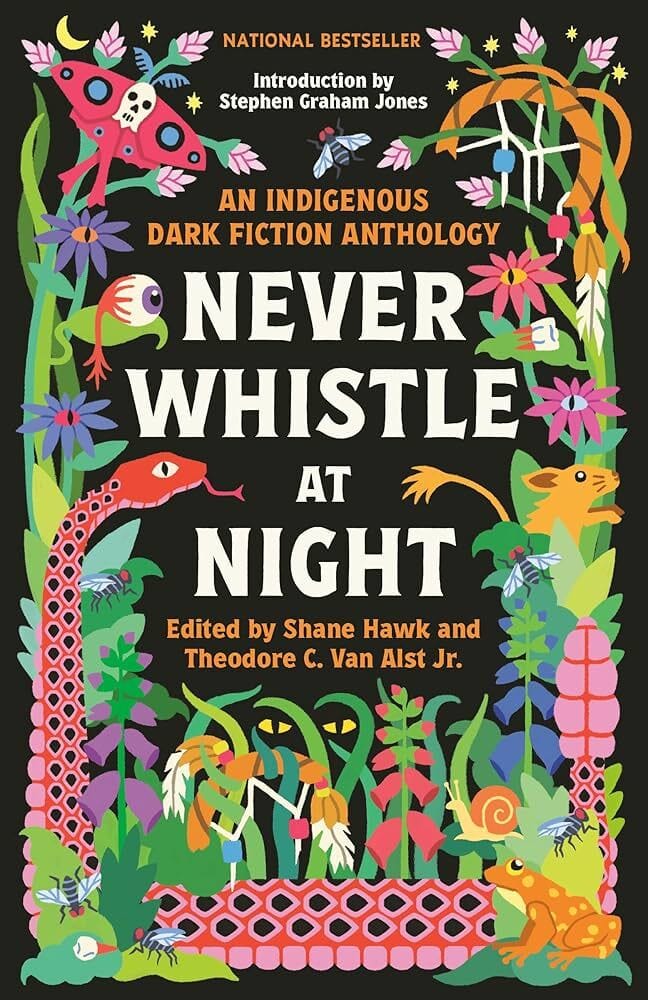
Never Whistle at Night, edited by Shane Hawk and Theodore C. Van Alst Jr., is a phenomenal anthology of Indigenous dark fiction. The stories in this collection are unsettling, brutal, and bloody, from supernatural thrillers to the horrors of humanity. This collection offers a wide range of voices, both new and well established, from a range of Indigenous backgrounds. I had so much fun reading and being moved, awed, and spooked by these tales.

Witchcraft for Wayward Girls by Grady Hendrix explores the ways young women are swept aside, like dust under the carpet, when they fail to follow society’s expectations of being perfect and pure. When fifteen-year-old Fern becomes pregnant, her family sends her to the Wellwood Home, a place for wayward girls to give birth away from the outside world and then return to their normal lives. While at the home, they are expected to let go of the girls they were — and are not even permitted to use their real names — so that they can return to their lives as if nothing happened. Like it wasn’t even them. Hoping to find a way to save themselves and each other, the girls turn to a mysterious book of witchcraft, promising the power to change their lives. When no one listens to you, sometimes turning to an ancient, dark, and dangerous power feels like the only way out.
Hendrix does a wonderful work with this story, reflecting the feelings of being a teenager, trapped by one’s life and unable to gain access to support or help from the adults around them. These girls felt real, full of depths of sorrow and desire and rage. And their story is frightening and moving.
Poetry

Through Immortal Shadows Singing by Mari Ness is a gorgeous novella in poems, which explores the Trojan War from the point of view of Helen of Troy. Seen primarily as an object of desire, with a face beautiful enough to “launch a thousand ships,” Helen is rarely granted her own agency. Ness rectifies that by providing her a space to tell her own tale in lyrical lines, reflecting Helens passions, fears, madness, and longing amidst a series of events over which she has little control. It’s such a lovely spin on the ancient tale.
I am abducted, abductor,
lover and wife, chaste
and whore. About me coil
a thousand songs, a thousand lies,
and even this song may be a lie,
a song I whisper
to take command of my own tale.
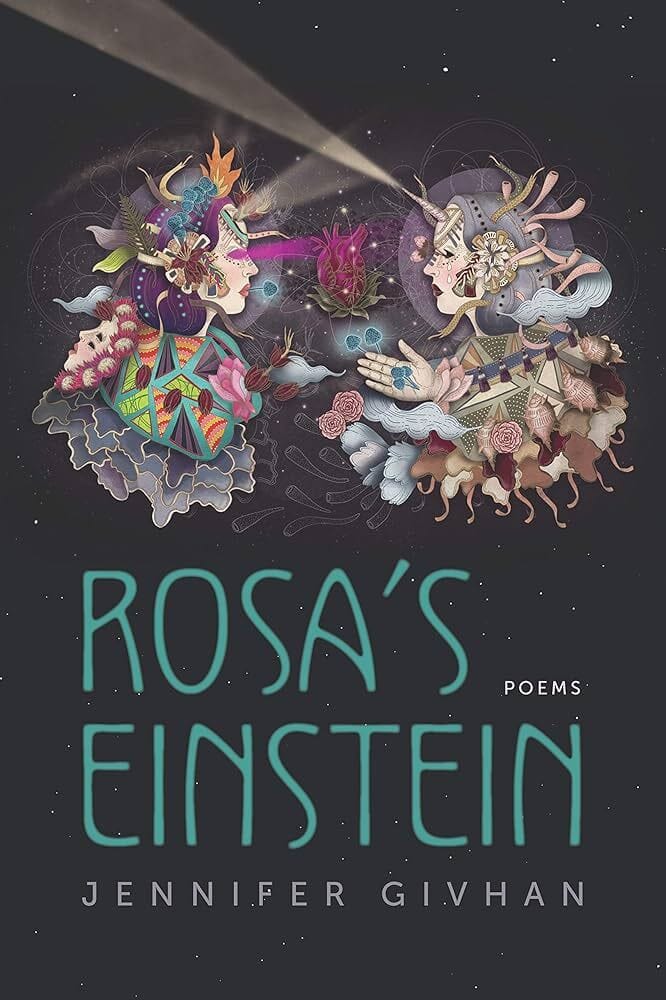
Rosa's Einstein is a stunning collection of poems by Jennifer Givhan. The collection is a lyrical, Latine retelling of the Brothers Grimm tale, “Snow White and Rose Red,” blended with story of Lieserl (Albert Einstein’s forgotten daughter). The text blurs the edges between the scientific and the fantastical, offering whispers of hope and healing in a harsh world.
I believe in the conservation
of bird wings, in tiny packages of light
and their insistence on shining
in the resurrection of dying things.

Held is the first book of poetry from Lorenz Mazon Dumuk — both my long-time friend and one of my favorite poets. In particular, his slam and open mic performances are delightful. He’s witty, intelligent, and deeply compassionate — and all of that comes out in his brilliant work. Whether he is communing with his family and ancestors, examining the many facets of himself, or exploring the idea of manatee farts, Dumuk brings a deep resonance of heart and soul into every poem.
on the days i feel i am not enough
i will bee my hand into the comb
hidden inside my chest
my fingers dripping with honey
i am rich with sweetness

Into the Forest and All the Way Through by Cynthia Pelayo is a collection of true crime poetry, honoring the multitude of missing, lost, and fallen women and girls. Each of the poems is a kind of haunting, bringing forth a memory of the lost so that they may not be forgotten. With clear, beautiful language, these poems present horror and heartbreak and the slimmest shiver of hope — with each one including the name, race, age, location, and the phone number for the investigating police department on the chance that the reader might have some information to help the investigation. This collection of poetry is a beautiful and tragic work — and an absolutely necessary read.
The theories and suspicions abound
internet pages, documentary shows
reports, and over reports of the girl
who set forth the first steps in her
own mystery.

Mary Oliver’s poetry is fairly well known, with poems like “Wild Geese” and “The Uses of Sorrow” being widely shared across the internet. Her work has a compassionate quality to it, as an observer trying to connect with and love the world — even when it’s hard. Picking up Dream Work is the first time I’ve read Oliver’s work as a collection. As I read these poems, turning each page and soaking up the words like a balm. There is so much beauty and wonder and hope here.
Everyone knows the great energies running amok cast
terrible shadows, that each of the so-called
senseless acts has its thread looping
back through the world and into a human heart.
And meanwhile,
the gold-trimmed thunder
wanders the sky; the river
may be filling the cellars of the sleeping town.
Graphic Novels

Their Kingdom Come is the final book in Marjorie Liu and Sana Takeda’s Night Eaters trilogy. In the face of an apocalypse accidentally unleashed by twins, Milly and Billy, surreal powers are flooding the world, leaving society reeling. Keon, a warlock who wishes to shape the chaos into his own reality, attempts to gain control of the situation through manipulation and lies. So, the the Ting family gathers all their will and resources to save the world — and themselves.
It is so satisfying to see the story come together in this final volume. Liu and Takeda’s narrative and art are both wonderfully complex, weaving together a tale of family and love amidst immense horrors.

It Eats Planets by Samantha Mackenzie Greer is an ongoing comics project, with a new page being posted online each week. The story presents a dark, dystopian sci-fi horror about a woman with three arms, who is captured by the corrupt government. It’s clear from the early pages that she’s planning something (a heist, I believe), and is gathering together the materials and people she needs to accomplish her goal. The art is crisp and gritty, and the story is captivating. I love It Eats Planets, and the fact that it’s only released one page a week is teaching me patience.
Memoir

Enjoy Me Among My Ruins by Juniper Fitzgerald is an experimental narrative, blending “feminist theories, X-Files fandom, and personal memoir.” The book is beautiful and confronting. As a sex worker and author, Fitzgerald is able to share her personal experience with a sense of poetic depth, offering a compassionate perspective of what it’s like to struggle and fight for a place in the world and what it’s like to be a mother when society harshly judges you for the work you do. The author’s love for her daughter and the friends who make up her found family is so clear. This feels like an important book, even if it’s sometimes and uncomfortable one.

Junji Ito’s Uncanny: The Origins of Fear is part autobiography and part an exploration of writing craft. In the earlier chapters, Ito shares his life growing up with a love for scifi pop culture (like Astroboy, Ultraman, and The Beast from 20,000 Fathoms) and falling in love with the works of horror manga (from authors such as Kazuo Umezz and Shinichi Koga). He then describes his journey from drawing manga to pass the time during school to becoming a dental technician before eventually returning to eventually publishing his first horror manga story, leading to him becoming one of the greatest horror manga creators of all time.
Following the autobiography section, Ito also provides insights on how to make good horror manga. He also looks at some of his most famous stories, discussing how he developed the ideas for the tale, crafted his characters, and created the beautifully rendered and traumatizing art for his manga.
What were some of your favorite books from this year?
Reply