- Infinite White Space
- Posts
- Culture Consumption: March 2026
Culture Consumption: March 2026
All the books, movies, television, and games I enjoyed over the last month

Andrea Blythe
April 07, 2026
Books
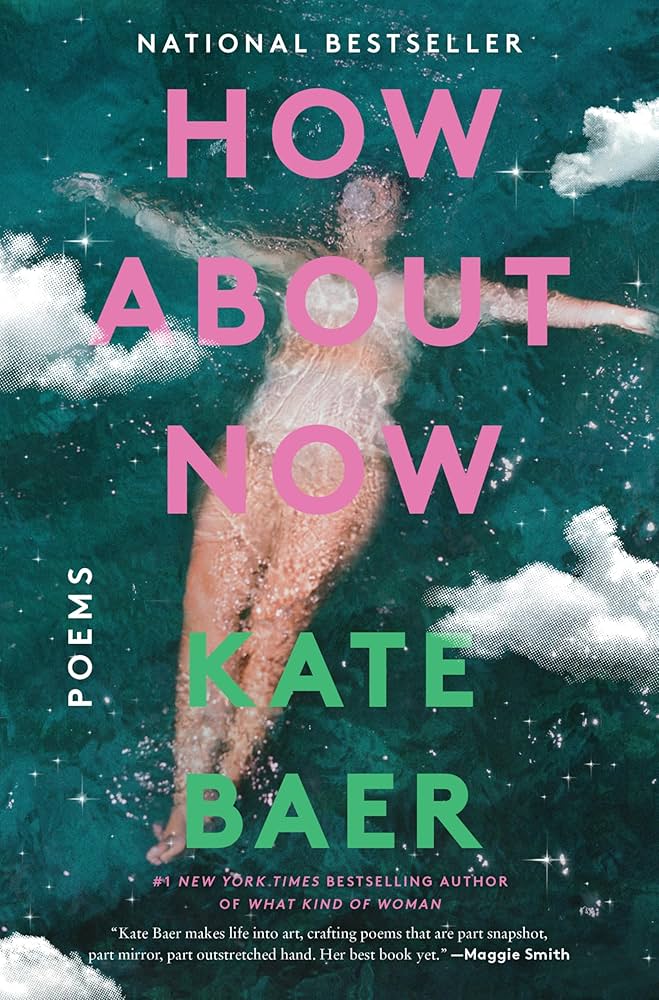
I picked up Kate Baer’s How About Now because I’m a sucker for book covers depicting women who are ethereally floating. I was delightfully surprised by this candid collection of poetry. Baer has a plain style that allows her to express an honest portrayal of the middle age, womanhood, beauty, and understanding the self. She also likes to play with form in interesting ways. Among her free verse are erasures and poems in the form of worksheets, forms, and records. The poems disguised as everyday boring documents were some of my favorites, as the contrast between form and text allows Baer to more deeply explore the rawness of human experience, the uncertainties in the everyday life.
Have I mentioned the sun? I’m eating it with my mouth open. Eating it until I become light itself. Light moving through the leaves.
She woke up at 42 and thought, I have led a toothless life.
In English, we say, “I wish things were different.”
In poetry, we say, “I have yet to follow a river home.”
Books Finished This Month:
Make Trouble by John Waters
How About Now by Kate Baer
Total Books for the Year: 8
Still in Progress:
The Haunted Computer and the Android Pope: Poems by Ray Bradbury, Clown in a Cornfield 2: Friendo Lives by Adam Cesare, and Tao Te Ching by Lao Tzu.
Short Stories & Poetry
A selection of works I recently read in journals and online publications, with a few lines from the text shared here.
Science Fiction: “With Her Serpent Locks” by Mary Robinette Kowal (Uncanny Magazine):
She was peeling a pomegranate in the kitchen, knife cutting through the thick waxy skin when the new message arrived. Her hair slithered and hissed with agitation. Euralye put the knife on the counter and let the pomegranate sink to the bottom of the bowl of water. She could have the replicator create perfect seeds, but this one came from a plant grown from seeds gifted to her by one of her kinder cousins when she left. The imperfections gave her some of her few happy memories of home.
Science Fiction: “Mother’s Hip” by Corey Jae White and Maddison Stoff (Lightspeed Magazine):
High above the Amazon Rainforest, Hynd circled, her massive wingspan only visible by the shadow she cast on the battlefield below. She felt the wind pass across her wings, whispering of torrential rain coming; not her concern, so far above the clouds, but she packaged the data and shot it down to the comms base at ground level so the grunts would know what was coming.
Science Fiction: “Laser Eyes Ain’t Everything” by Effie Seiberg (Diabolical Plots):
I sat in my wheelchair next to the three steps that led to their front door, and groaned. My brand new laser eyes didn’t exactly fix my mobility problems.
Poetry: “The blanket, the secret, the dark” by R.B. Lemberg (Strange Horizons):
Softening everything, sinking into the damp, fragile shelter of body. The words you wanted to write emerge at last, tight and unedited and tender. Cocooning. Cradling. Six lifetimes away, a butterfly crawls out, having eaten itself; wet, naked, without memory.
She spreads her wings.
Science Fiction: “Eat, Prey, Love: A Modest Proposal for Ensuring Gender Equality Through Selective Dietary Practices; or, a Geriatric Millennial’s Guide to #GirlDinner” by Jilly Dreadful (Lightspeed Magazine):
“Young women aren’t inherently cannibalistic,” says Dr. McGowan, a leading expert in digital anthropology. “It’s just the algorithm that can make them this way.”
Movies
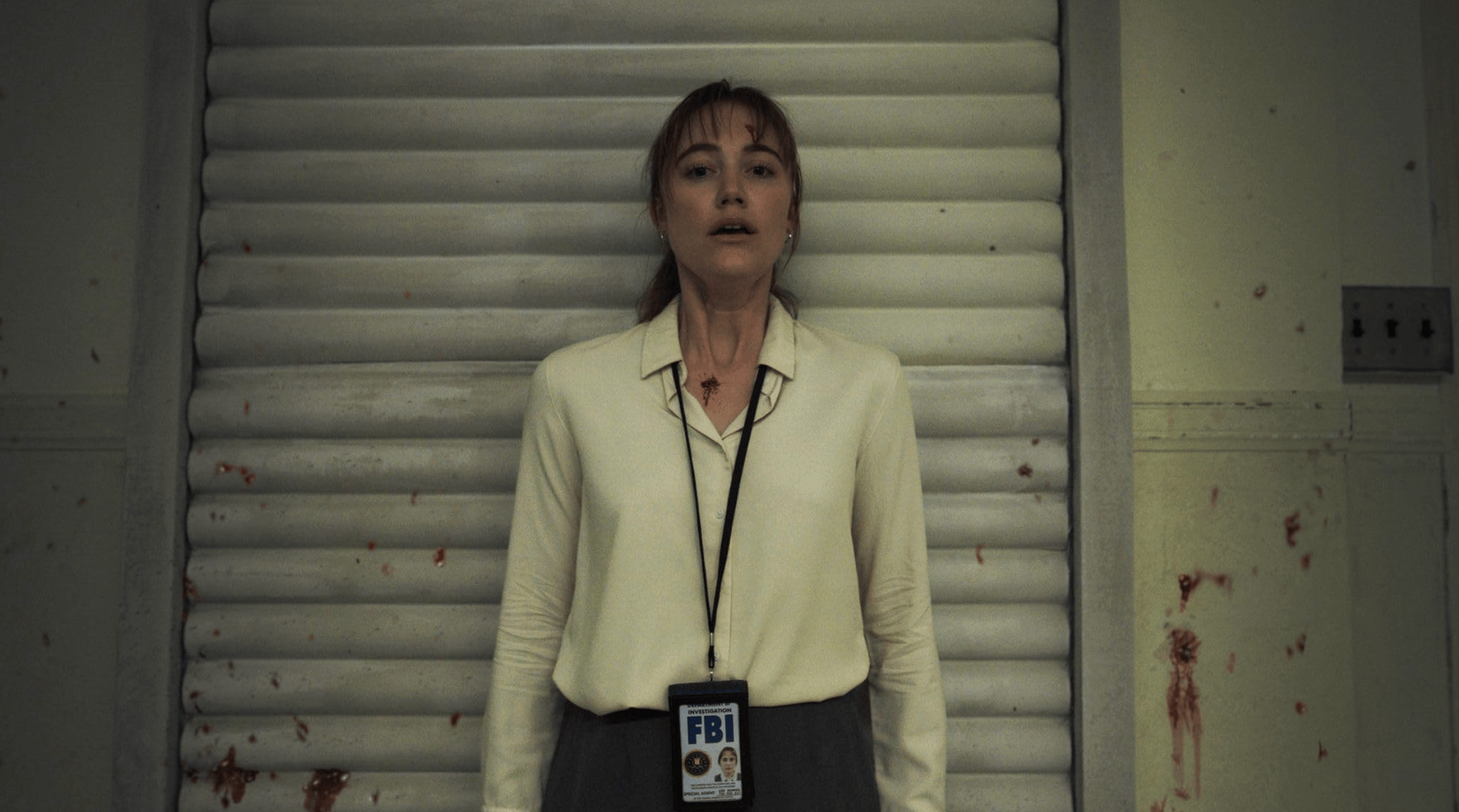
Agent Lee Harker (Maika Monroe) connects the horrors of her current case with the horrors of her past | Longlegs (2024)
Longlegs (2024) is an interesting crime folktale. When FBI Agent Lee Harker is assigned to a serial murder case, she must dig through a series of supernatural and cult-like clues to find the killer. In the process, the hunt dredges up unsettling truths from her own past. It’s an interesting story with slick filmmaking and great acting, but I couldn’t really find the emotional heartbeat of the narrative and it ultimately left me a bit cold.
Television
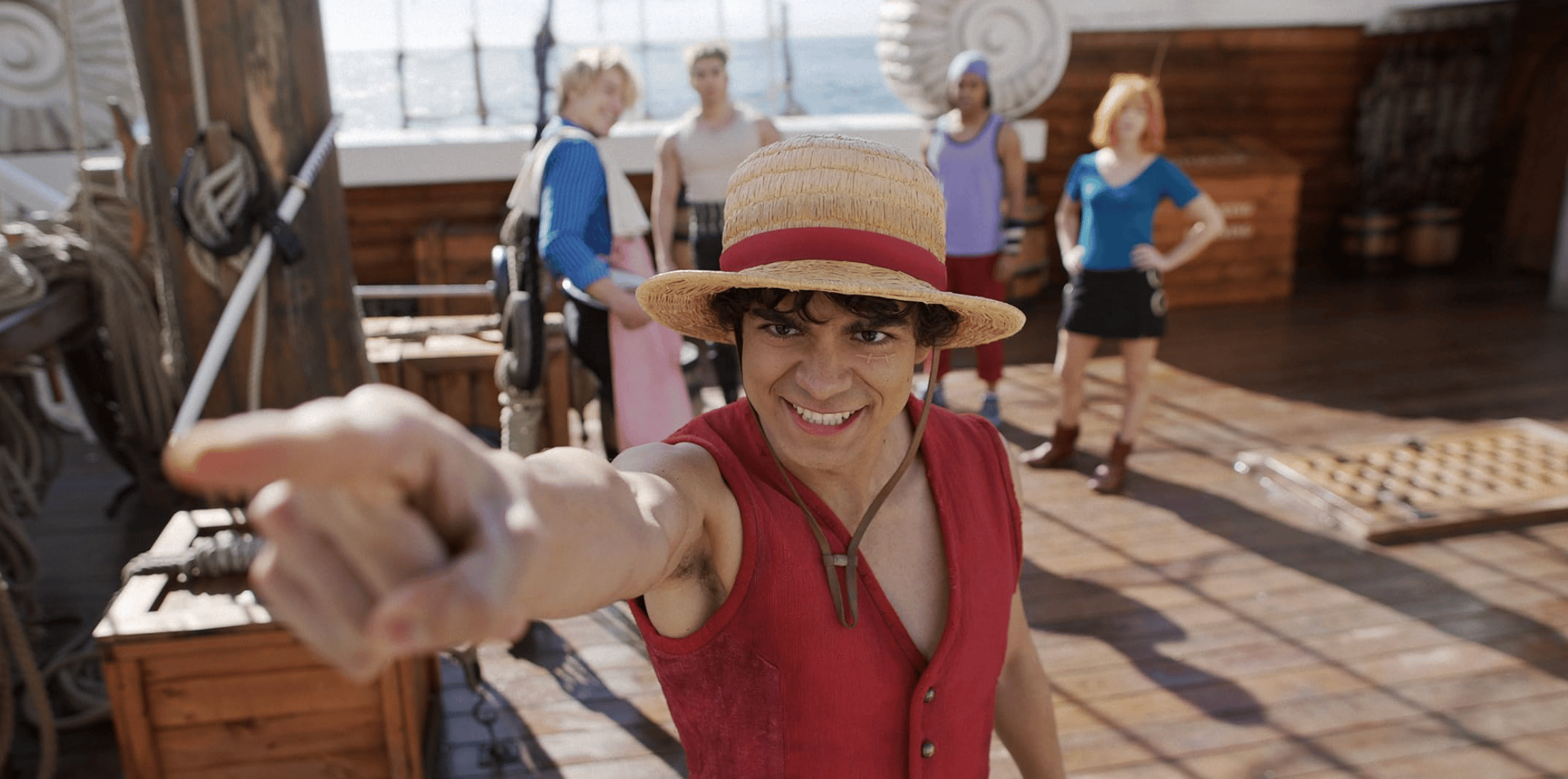
Monkey D. Luffy (Iñaki Godoy), captain of the Straw Hat pirates leads his crew to the Grand Line in One Peace (Season Two, 2026).
The first season of One Piece was a wonderful comfort for me, and season two was just as much of a joy to watch. Monkey D. Luffy, captain of the good-natured Straw Hat pirates, is such a chaotic delight, and I love his equally chaotic crew. The chemistry between all the members of the crew is so solid, and I love the nuances of their relationships, with all the squabbles and loving support of a true found family. They make a great team when facing off against all the new adventures they discover once they make it to the Grand Line (an area of open sea speckled with strange island, where the One Piece treasure is rumored to be hidden).
Season two has a bigger budget for its combat sequences, which are (for the most part) incredibly stylish and fun. These fights — particularly Zoro versus the 100 (which actually involved 100 stunt actors to fall before Zoro’s blades) — are incredibly choreographed with long camera shots that allow you to actually see the action and witness the skill of the actors and stunt performers.
Everything about this show is so fun, and though it often leans toward the wacky, it also holds true to its heart. Dark and tragic stuff happens, but it’s wrapped in an overall feeling of friendship and hope in the way this crew respects and trusts in each other. For every over-the-top moment, there are moments of deep emotion that makes you feel for these characters.
I just love it so much.
Games
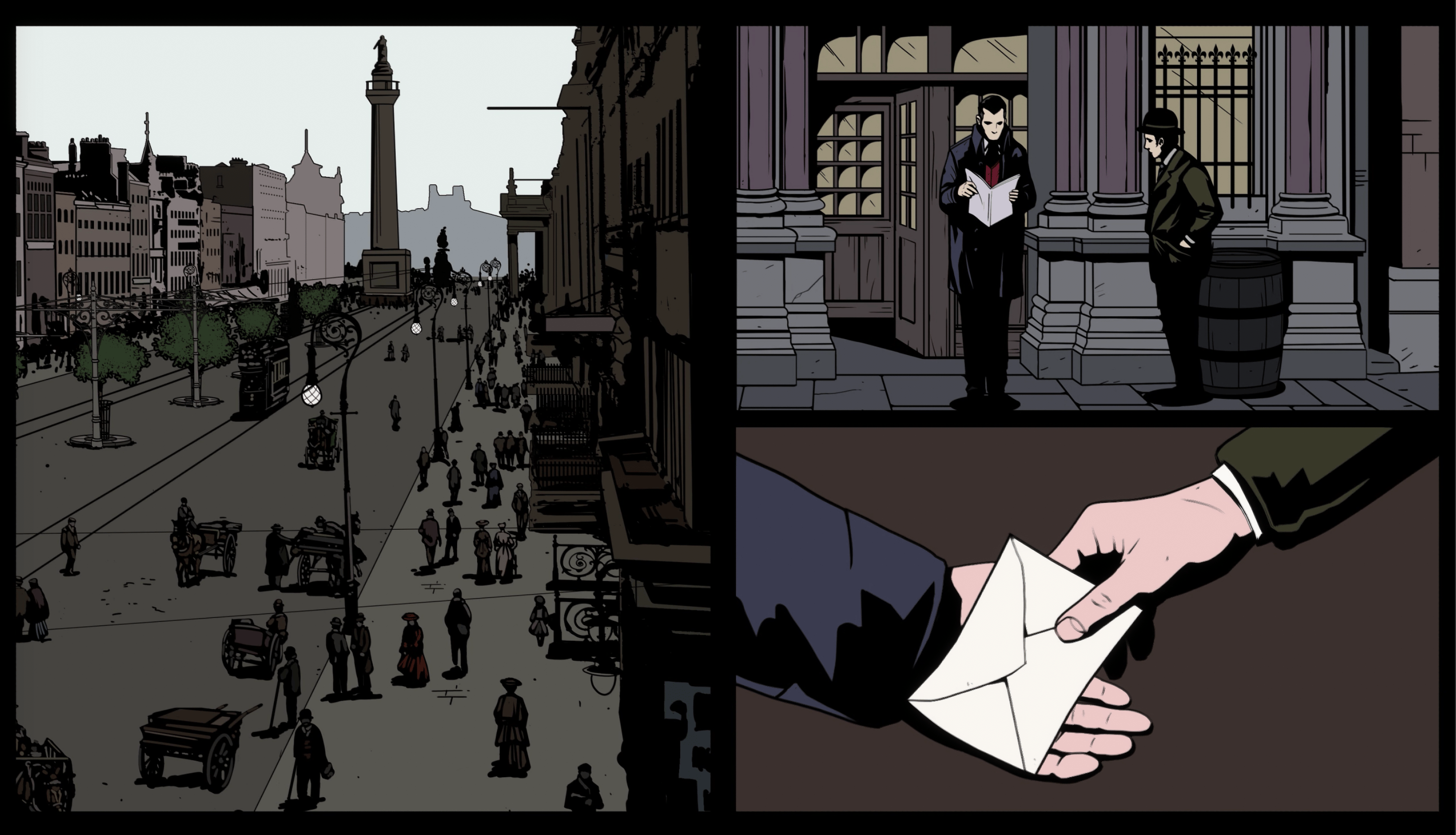
The Séance of Blake Manor | screenshot by me
I started playing The Séance of Blake Manor (Spooky Doorway), a first person puzzle adventure and detective game. Declan Ward is hired to find Evelyn Deane, a woman who seems to have disappeared at Blake Manor. The Manor (a high-end hotel) is hosting a séance, attracting a dozen or so strange individuals who believe in the supernatural and strange. The player’s job is to explore the Manor, sneak into guest rooms, and interrogate guests and staff to find evidence of what happened to Evelyn — all of which is displayed on an elaborate mind map that allows the player to make connections to find the truth in the limited time before the seance takes place. Each investigative action costs the player a minute of time, building a sense of tension and the need to rush.
I’m only a couple of hours into the game at this point, and I’m thoroughly enjoying it. However, my set up (basically a PC emulator on my Mac) has presented some technical issues that are making it difficult to move smoothly through the game. Hopefully, I can work through it, because I’m really interested in exploring more of this story.

Ghost of Tsushima | screenshot by me
I crossed into Act II and II of Ghost of Tsushima (Sucker Punch Productions), the game took some powerful narrative turns, with Jin leaning more heavily into become the Ghost and making some choices that I felt uncomfortable with as a player. The way games can play with discomfort by having the player enact actions that might be morally conflicting is always fascinating to me. And what I love about Ghost of Tsushima is how, despite creating this sense of internal conflict (for me as the player), I still sympathized with Jin and his choices. I understood where he was coming from, as well as understanding where his uncle’s opposing perspective was coming from.
It makes for such interesting storytelling — and simultaneously changed the way I approached playing the game. In Act I and II, I tried as much as possible to stick to the samurai path, stepping directly into combat and facing my enemies head on, because I wanted to please Jin’s uncle. But in Act III, after a series of events transpired that complicated Jin’s relationship with his uncle, I found myself leaning more heavily on the ghost abilities, because it felt like I didn’t need to abide by the uncle’s old-fashioned rules. In other words, the gameplay shift this moment created in me reflects Jin’s own shift away from his uncle’s ideals.
By Act III, some of the side quests and mini games did start to feel repetitive, but I was enjoying myself so much I didn’t care. Ghost of Tsushima is one of the rare games in which I wanted to gather up everything I could, just so I could run around on my horse and fight Mongols for a bit longer.
Ultimately, the story of The Ghost of Tsushima is a heartbreaking one. Jin stays loyal to his home all the way through, but unfortunately this is not enough — and the final moments of the game pack a hearty emotional punch.

The Iki Island dlc provides cool optional armor, including this incredible horse armor and secret armor inspired by other games (such as this mask inspired by Shadow of the Colossus) | screenshot by me
After finishing the main game, I also played the Iki Island dlc. After discovering a town of people driven mad by some strange poison, Jin returns to Iki Island, where his father had previously invaded, leaving the inhabitants with a lasting grudge against his family. But since Jin’s focus is solely on defeating the Eagle Tribe, a subset of the Mongols, and preventing them from reaching the mainland, he ends up becoming allies with former enemies.
Along the way, Jin is poisoned by the Eagle, head of the Eagle tribe. The poison causes deeply unsettling hallucinations as he explores the island and faces off against enemies, even pushing him to doubt his new allies. Each hallucination dredges up Jin’s own insecurities about his role in this war, the past actions of his families, and his honor (or lack thereof) — all meant to push him to break down his mind and will. In order to face his enemy, he had to reckon with the past, all of which makes for a very satisfying addition to the game’s overall story.

A Little to the Left | screenshot by me
I finished up A Little to the Left (Max Inferno), a game of deceptively simple puzzles involving organizing household objects, such as cleaning up a desk space, putting junk drawer items in their proper place, and pruning plants to be symmetrical. A number of puzzles have multiple solutions, such as sorting by the size, color, and/or pattern of the object, which keeps things interesting. It’s a fun, casual time.

Screenshots from some of the Next Fest games I played.
Steam Next Fest took place at the beginning of March, providing gamers with an immense amount of demos for games currently in development. I played Phonopolis (Amanita Design), Wax Heads (Patattie Games), Besmirch (Gangru Games), Letter Lost (FlatNine Games), Human.exe (Weird Engine), A Storied Life: Tabitha (Lab42), Our Ordinary Home (Mantaray161), and Sister Ray: A Walk on the Wild Side (The Growing Stones). A full recap of the games I played can be found at Once Upon the Weird.
I also played a cool browser game, “Wolfgirls in Love” by Kitty Horrorshow, which is a minimalist text adventure, using as few words as possible to express a sense of love, passion, and bloodshed in a queer love story about werewolves.
That's it for me! What are you reading? Watching? Loving right now?
Thank you for reading and spending a little of your precious time with me! If you’d like to support my work, you can subscribe for free or, if you are a generous soul, you can buy me a coffee.
I make games! You can play some for free on Itch. If you’re a game developer looking for a writer or narrative designer, please check out my portfolio.
I also write poetry! Find my books here.
Reply