- Infinite White Space
- Posts
- Women in Horror Month: Banana Chan on Designing Table Top Games and Honesty Through Horror
Women in Horror Month: Banana Chan on Designing Table Top Games and Honesty Through Horror

Andrea Blythe
March 17, 2026
Happy Women in Horror Month! All month long, I’ll be sharing interviews with women and gender-queer designers, writers, and creators making cool horror game experiences, with dark themes and interesting concepts. Find more celebrations on Gwendolyn Kiste’s blog.
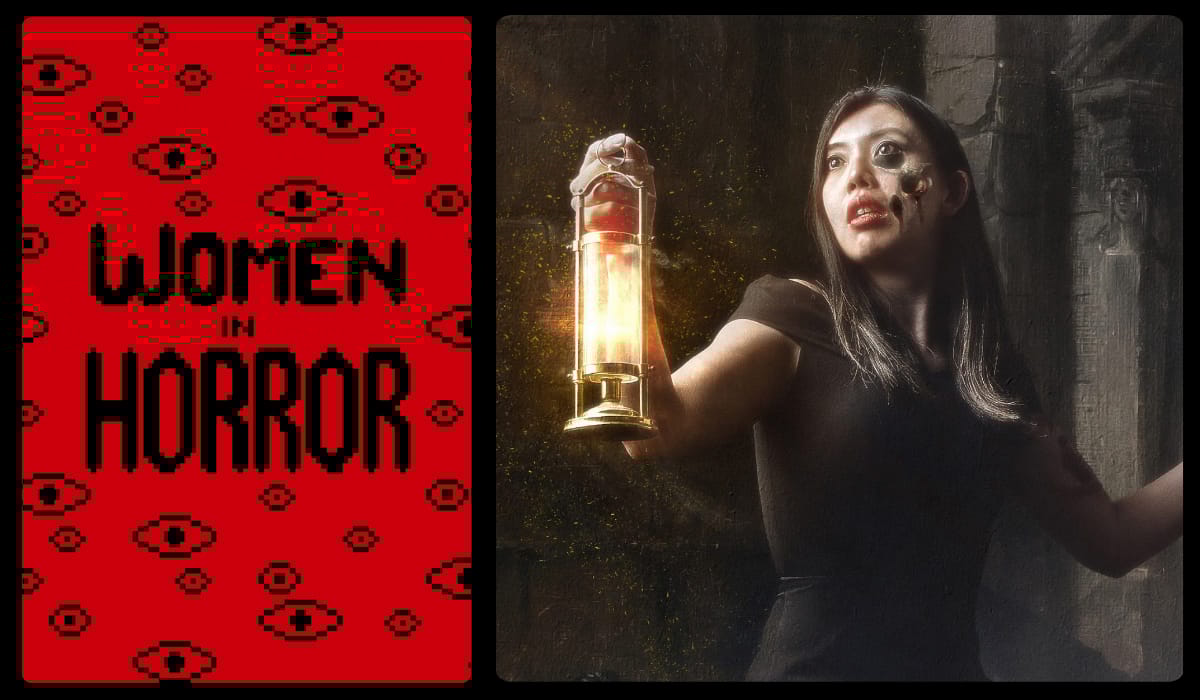
Banana Chan is a horror game designer and screenwriter living in Seattle. She is also the owner of the publishing company, Read/Write Memory. Her most notable work has been on Forgery, Jiangshi: Blood in the Banquet Hall, Van Richten’s Guide to Ravenloft, Betrayal at House on the Hill: 3rd Edition, and Chucky: The Board Game. She won Dicebreaker Awards' Game Designer of the Year 2022 and 2 Silver ENnie Awards in 2022.
Note: This interview was recorded via a video call, and I’ve slightly shortened some answers for brevity’s sake.
What was your pathway into making games? Was it something you always wanted to do?
Um, no. I don't think this was something I always wanted to do… I went to [NYU] art school, and I didn't really know what I wanted to do… I minored in cinema studies… and afterwards, I just sort of assumed I was going to get a job, like it would be easy. Because, you know, you get a Bachelor's degree and then eventually you get a job, right?
But then it was super hard for me to find a job. Like, I had interned at MTV for a little bit, and I was like Oh, yeah, I can get a job at MTV. None of them wanted me…
So, eventually, I was hopping between retail jobs a lot and eventually, I landed a job at a retail bank, and I hated it. It was the most miserable time of my life. And I was getting paid like nothing. It was so bad, and eventually I quit and started working for a management consulting firm, and while I was there, I did a lot of video work for people, because I have a background in video — specifically, video art. And you know, my cinema studies stuff helped a little bit as well.
But that sort of helped me, like, stabilize a little bit in my life. Ultimately, I was like, I have a desk job now. I can sort of not think as much about, worry as much about finances… And during that time, I was also going through, like, and alcohol problem... It was just a lot of stuff going on at that time. But ultimately, it led to me taking a step back and thinking, What do I want to do?
So, I got my masters in graphic communications management technology, which also wasn't really what I wanted to do. It was all these snippets of things that interested me, but wasn't necessarily stuff I wanted to do.
And so, my partner, Herb, was like, Hey, let's go to a table top gaming convention. I think that your drinking problem has gotten out of control. Let's try to pivot somewhere and do something different. So, we went to a game convention in New Jersey, called DexCon, run by a company called Double Exposure.
So, I went to DexCon, and I met a bunch of people. I got super into table top games, and I met a bunch of folks who were into LARP, and that was how I got into LARP. And then from there, I sort of just went down this rabbit hole of, What does it mean to publish something? What does it mean to design something?
And I just started helping a lot folks with their videos for Kickstarter, when they were trying to crowdfund stuff. And ultimately, I decided to design my own game. And yeah, it was just.., looking back, it felt like all of the pieces were there, with the art school stuff, the management stuff, project management stuff, the video stuff. All of it was stuff I picked up along the way, but it wasn't until I actually started doing games, then I realized, oh, all of this was leading to that path.
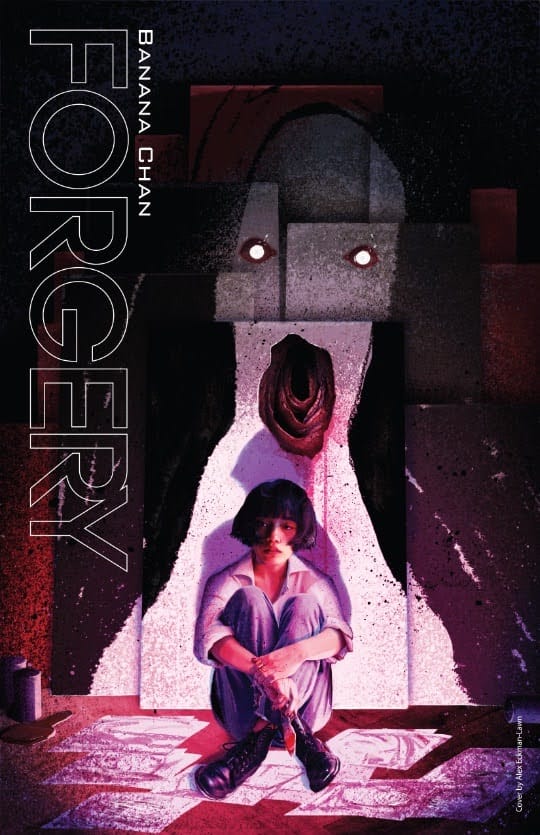
Forgery, a solo table top role playing game (TTRPG) published in 2023.
Yeah, totally makes sense. So, you're also a writer of horror screenplays and such things. Can you talk about some of the creative work you've done on that side?
Absolutely. I've been doing it for the last four years. But I'm still pretty fresh in, like, the filmmaking/TV world. So, one of the screenplays I've worked on is with my friend Carlos Cisco. We wrote a screenplay, based on my game Forgery. The screenplay is about professional jealousy and creative jealousy and trying to find who you are and figure out, like, what is your creative voice in a sea of other creative voices, right.
But the main character, she struggles with trying to figure herself out. And in doing so, she sort of destroys everyone else around her, because that's what spite and jealousy does. It sort of shifts the focus away from who you are to other people and why is it that they have all these things, and I can't have all that, all the things that they have. So, that's the premise of the screenplay, where it's this professional art forger.
She's also an artist. She's trying to find her creative voice, but instead of developing her own voice, she takes on, sort of like this commission from this..., we're going to call them a patron, like a wealthier patron, who is like, I want to see some original work. And she starts doing some original work, but as she's doing it, this muse comes to life, this demonic muse, and sort of turns her into something that's more spiteful. And ultimately, this parasitic muse is her downfall. It turns her into something completely inhuman.
It's got a lot of commentary on AI. It's got a lot of commentary on, you know, creative jealousy. And yeah, a lot of commentary on just what it's like to be a creative in the world in general.
Yeah, so the screenplays are still something you're working to get produced?
Yes. It's a slow process unfortunately. I have a bunch of screenplays and obviously not all of them are going to happen, because of the state of Hollywood right now. And I think, this creative industry specifically is pretty volatile. I think it's just going to take some time. But I've met a lot of cool people along the way, so I'm very excited for that.
That's always awesome. So, what draws you to working in the horror genre? How does it let you explore the kinds of stories that you want to tell?
I think that horror specifically is something that I've always been interested in, because it let's me be a little bit unfiltered and honest, rather than trying to, you know, adjust the way that I have my tone or the way that I speak.
There's this interview from Zach Cregger that he did a while ago on Weapons, where he said that horror is like his chosen material. His material just happens to be darker… and he was talking about when he was working on Weapons, I think he was in his basement or garage or whatever, and he was just turning this thing out, and it felt like a kid playing with crayons — that sort of creative, unfiltered, you know, playful kind of way, where you have all these different tools in your toolkit and you're just able to just word vomit it all out. And it feels cathartic, and it feels very honest to who you are.
And I think that that's how I feel when I'm talking about horror as a genre. It feels both cathartic and honest, and something that I could just be myself when I'm creating this thing… These are the stories I want to tell. It feels cathartic because, you know, these are based on experiences that I've had. And I feel like the more personal that it gets the more that, hopefully, other people will see it and feel like, Oh, I experienced it, too.
In your work in games, you've worked on a lot of pretty awesome franchises, like Dune, Chucky, and Scooby-Doo. So, what is the process for creating work in the existing universe with existing characters?
Yeah. It's very different, because you're working with someone else's intellectual property. And I think that, as an example, when we were working on Scooby…, Scooby-Doo: Betrayal at Ho — It was like Scooby-Doo..., I'm trying to remember the title, because they changed it a little bit to make it more Scooby themed. So instead of Betrayal at House on the HIll, it was like, Betrayal at... something something. [Note: It was Betrayal at Mystery Mansion.]
But when we were working on Scooby: Betrayal, it was two different intellectual properties that we had to take into consideration. So, there's the Scooby IP and there's the Betrayal IP. When we worked on this project, we obviously had a lot of restrictions, like a lot of things had to fit within the two brands. So, the first brand being Betrayal. Luckily, it as a little easier with mechanics, when you're talking about Betrayal —
Sorry, I'm just going to interrupt and say, for those who don't know what Betrayal is, could you maybe explain that real quick?
Right, yes. Betrayal on at House on the Hill is a table top board game where you are a group of friends, or maybe you're strangers... You're just a group of people who have stumbled on this house, and you are trying to explore this house and figure out the mystery together. This house is made up of tiles. You are laying the tiles down on this table and exploring the house together and trying to figure out what's going on.
And in the middle of the game, suddenly someone, one of the players might trigger the haunt. As a result of that, [one] player would become the traitor. So, there's a traitor mechanic, where they would basically just go away — typically, how we play is once the traitor gets triggered, then they leave the room, and they read their traitor booklet and the rest of room reads their own haunt booklet.
So, there's two separate things going on there, because the non-traitor players, they have a certain set of rules that they're reading through that is through their lens. They don't actually know what's going on with the traitor, and so their view of what's happening — both in terms of mechanics and in terms of the flavor text is very much skewed through the lens of what is happening to all the other players.
Meanwhile, the traitor has their own set of rules, and it is very much skewed in the lens of what is the traitor going to do… Each haunt has special rules for the traitor, specifically. And it can get very bonkers very fast, with [everyone] trying to figure out, What is the traitor doing? What are they trying to do? And sometimes, it might not make a lot of sense until the win condition. They both have win conditions, but the win conditions are always different based on what haunt you play.
And so that was the IP we were working with, which was great, because it was sort of..., it was sort of like a sandbox, but… we had a lot of freedom in terms of, like, what could we do with this? What are the cool mechanics that we want to show off that really are very Betrayal heavy?
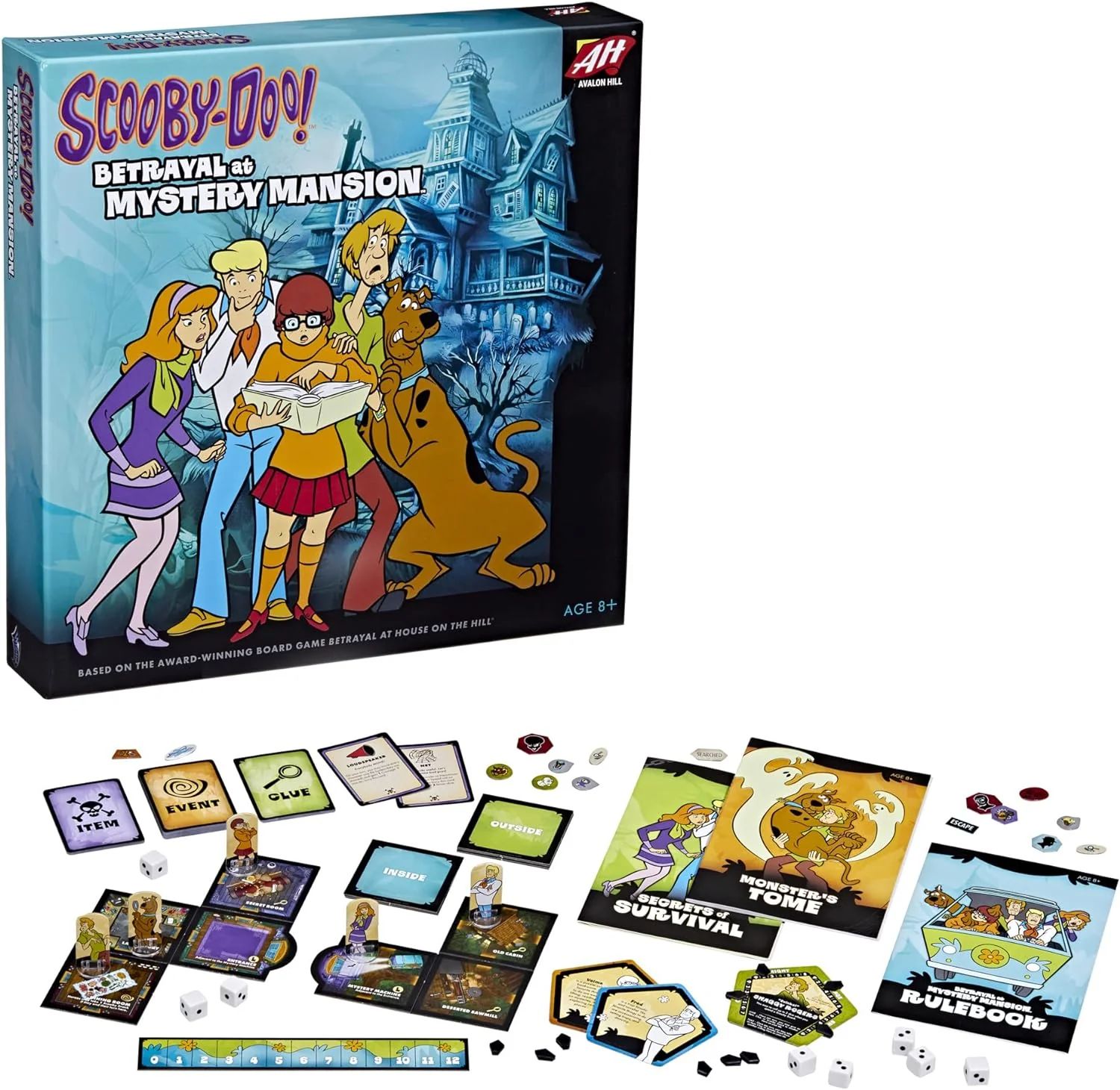
Scooby-Doo: Betrayal at Mystery Mansion | source: The 4th Place
So, when we were working on that, I feel like the biggest restriction was actually Scooby… We had to go through a whole bunch of episodes of Scooby-Doo, Where Are You!, which I used to watch when I was a kid, so I was a Scooby fan growing up… We had some movies we had to pay attention, too… And so, we had to make sure that it followed those brand guidelines, that it followed the lore that they had already set up.
We tried to flavor text the characters as much as possible, because the players are playing as Velma, Daphne, Fred, you know, those characters. And we had to make sure that they aligned with the actual lore of the TV show and movies and such, to fit with their brand.
I remember, like, Daphne likes motorcycle riding. That's her thing, that's one of her hobbies. And we put that into the character, and we were just like, Are fans not going to not get this? And we're like, This is a game for kids. This is going to be fun for them.
Later on, after it go published, [we didn’t expect] that people would be like, Daphne doesn't like motorcycle riding. What is this? It's obviously by someone that has no idea, no sense of what Scooby is about. And I'm like, we literally watched hours and hours of footage to make sure that we got fun little tidbits into the stories and into the characters, because we wanted to build characters that were both fun and also subscribe to the lore.
And it was a little frustrating when we dealt with the fans, because the fans had a lot of — and this is just me, a personal bias — I don't think the "fans" that were mentioning this stuff were real fans to begin with. And so, it was just kind of frustrating seeing that, because we spend so much time and poured so much energy and love into those projects. And it's just like, oh, people don't remember that certain characters have certain hobbies or likes or whatever. Ultimately, we just had to remember that sometimes some of the stuff that folks remember might not be, you know, it might just be something that they feel passionate about for some strange reason.
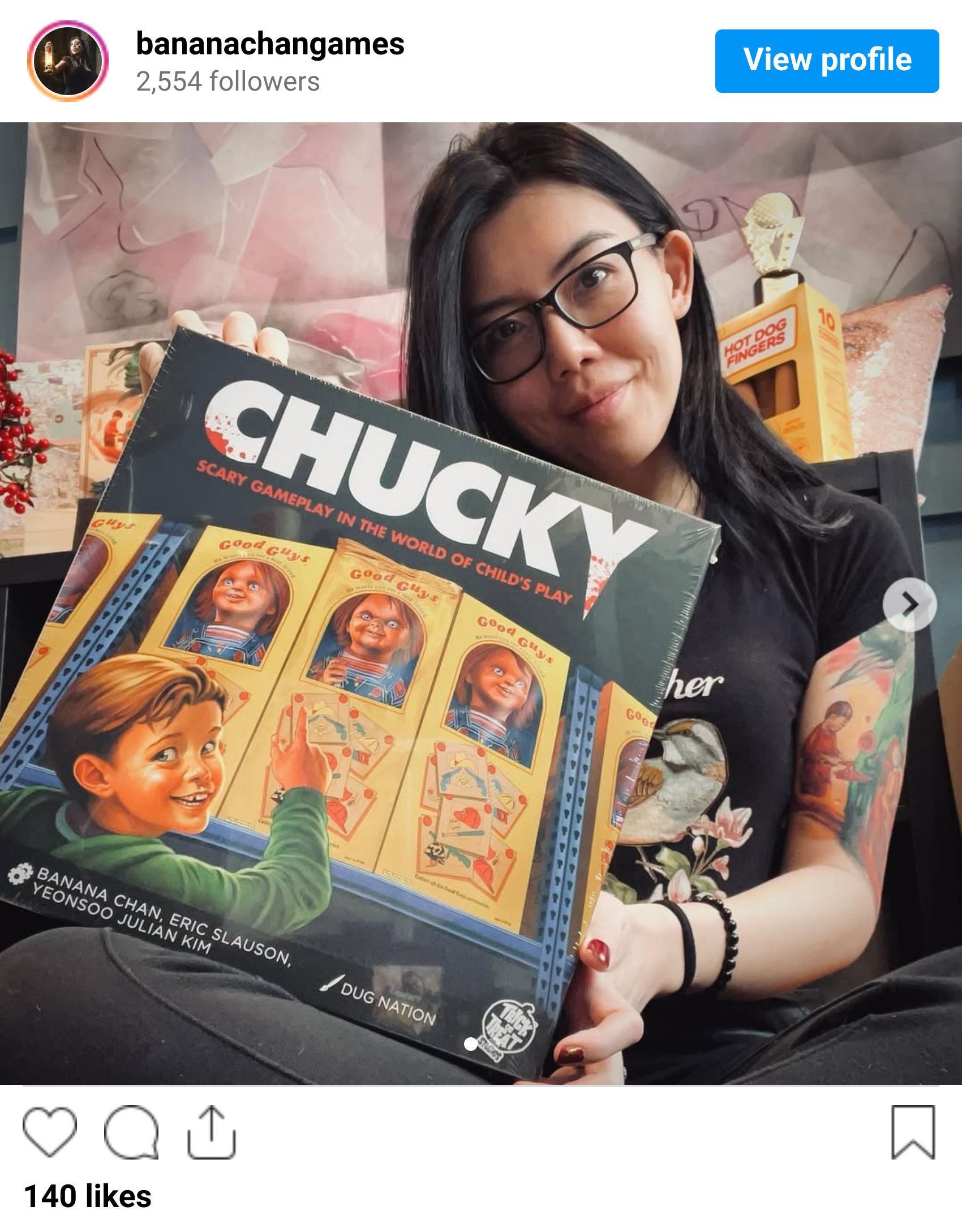
Flipping over to the Chucky board game…, I also am a huge fan of Child's Play and the Chucky TV show..., I mean, even the latest Child's Play movie, which was fun. So, when we were working on that, I mean obviously, same thing, with brand guidelines, making sure that we are following the lore of all of that.
But the bigger difference was that was that we had no sandbox with what we could do with the mechanics. So, me and the team, we just sort of tried to figure out what would make the most sense for Chucky. We wanted to make it campy. We wanted to make it sort of silly, but still have that horror element to it. So that's how we ended up with this very strange, like, push your luck style game that has a lot of heavy narrative.
And I think that folks that were fans of Child's Play. Folks that were board game fans might not have liked it as much. So, it was an interesting dynamic of trying to figure out, What would the fans like? What would the fans be excited for? And also understanding, who are the fans? Are they actually fans of the property? Or did they just watch the movie once and just forget everything about it?
Yeah, it was a very interesting project, for sure.
In 2012, you launched Game and a Curry (now known as Read/Write Memory) with Herb Ferman, a game publishing and world building platform. Why did you two to start your own publishing company? What are the benefits of doing so?
So, we started off as a food and table top games blog. We really liked games, and this was closer to when we had first started going to the Double Exposure conventions, and we really liked curry... We were living in New York at the time, and we would just go to curry restaurants, bring a small boxed game, and play that small boxed game at the curry restaurant…
And that's how Games and a Curry started. Eventually, after meeting a bunch of people in the industry, we were like, What if we just published a game? So, we met a bunch of people, especially designers who had mentioned, These are the printers we work with. We're not quite happy with them. We just want something a little bit different. So, we were just like, Why don't we learn a lot about the manufacturing side of stuff?
Eventually, we found a manufaturer based in China. Their name is Whatz Games. And we got in contact with them and Herb actually has a background in print, so he knows a lot about print stuff, like the paper quality and you know, all of that. And I don't know anything about that, so I depend on him a lot for samples...
But we decided to just do it ourselves. We had become friends with two designers, Dave Beever and Bryan Soriano, and we decided to pick up their game, Yeah, Diamonds. It's this kids game, like this tile movement kids game. Very simple mechanics. And we were like, let's just do it.
So, I contacted someone I had known from college to do the illustrations for the cover. Herb did all the graphic design on the interior. We talked to the production company, and were like, this is what we want to make. We got, I think it was a thousand units… and we didn't use Kickstarter. We didn't do anything. It was literally just us scrounging up money from our day jobs and getting it done.
We were also living in a studio apartment at the time, and so we kept these boxes in the bathroom. We didn't have any warehousing or anything, so when we had visitor's over, they would just be like, Oh, my god. Why are there walls and walls of boxes in this bathroom.
But we were selling these copies out of our bathroom, selling them on the website, selling them at conventions. We had no booth, too. At conventions, we just didn't have the money for a booth, so I would go to conventions and literally sell copies out of my bag. And people would buy it, and if it was a distributor, we would just be like, Do you want to work with us? Do you want to carry our games?
Luckily, we met a lot of people, and hopefully people liked us. And we were able to just distribute these games. The game is no longer in print, but it was just a very good experience. It was definitely..., looking back, I'm just like, Wow. We didn't do a lot of things right. We did a lot of things poorly.
But it was a good learning experience. And I always say, it's cheaper than getting another Bachelor's degree. So, I felt like that just deciding to do the thing was really helpful for us in getting into publishing.
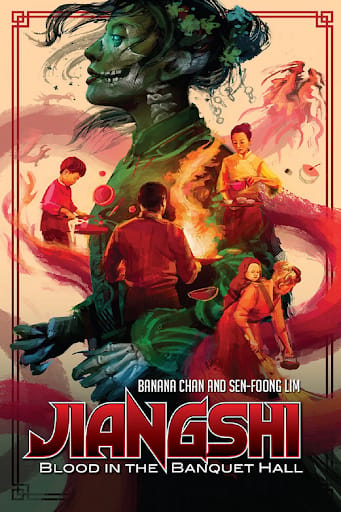
Jiangshi: Blood in the Banquet Hall was published by Game and a Curry (now Read/Write Memory) in 2021
One of the projects you worked was Jiangshi: Blood in the Banquet Hall. What was the inspiration for the game? And what was the development process for creating a table top game like that?
Absolutely. So, Jiangshi: Blood in the Banquet Hall was created me and my friend and co-designer, Sen-Foong Lim. We met in 2018 and we started chatting and were like, We should do soemtihng together. We should do something together.
And this had been an ongoing thing, and we never really thought of what we could do until I playtested a game that, at the time, I thought was very stereotypey of Chinese people. So, it was this game that I didn't have a good time playtesting, and I went to Sen and was like, There are all these games out there that take on Asian things that are typically not made by Asian people. So, what if we did something? What if we did something that felt a bit more honest and true to who we are?
And so, we decided to make a game together, and that turned out to be Jiangshi: Blood in the Banquet Hall. The game is about a Chinese-American or Chinese-Canadian family, depending on which setting you use. It's about them running a restaurant and it's the 1920s, and you have a lot of struggles being a small business owner, but also like the struggles of racism and oppression. The 1920s were not friendly to Chinese people.
And then at night, all these fears, all these terrors get manifested in this weird hopping vampire [called a “jiangshi”]. These hopping vampires become these physical manifestation of all the oppression that they face. And family members can also become jiangshi, meaning that it's sort of this perpetuation of oppression, right? Where, if you're not careful, you can sort of become the thing that oppressed you this entire time.
So, it's table top role playing game. Ultimately, you're telling stories. You have a GM. But we wanted to have tactile board gaming elements to it, which is why we added cards. We added a board. We added all this stuff to make it look both visual and also very tactile, so when you're playing, it feels like you're with a group of people, having dinner together or having a meal together. But you're actually playing a game together.
So, when you're designing the game, how do you test? How do you make sure a game is working in the way that you want it to work, so that it feels successful to the player?
Typically when — and this might just be me — but typically when I'm doing game design, and this was specific to Jiangshi, as well, we brainstormed a lot. So, Sen and I did blue sky brainstorming. [We had a] doc we were using. It was very messy. Doesn't matter what we want to do, just brain dump everything that you want.
So, we started from there, and then we started carving away at the options that we had brainstormed. One of the things that we had carved away from was the idea of moon blocks…, these wooden blocks called “jiaobei.” They're a divination tool for taoists, taoist monks and shamans, and some Buddhists, too. They use these things to basically roll these jiaobei and based on how they land determines whether you're going to have a good year or a bad year, or if its a question, would [it] come true or not.
But the problem was that they're very unreliable. There are only a few outcomes that you can get from the jiaobei, and so we were like, okay, we wanted to do something cool with it, but now let's just stick to dice. I feel like dice are the simplest option for this, so let's just use dice.
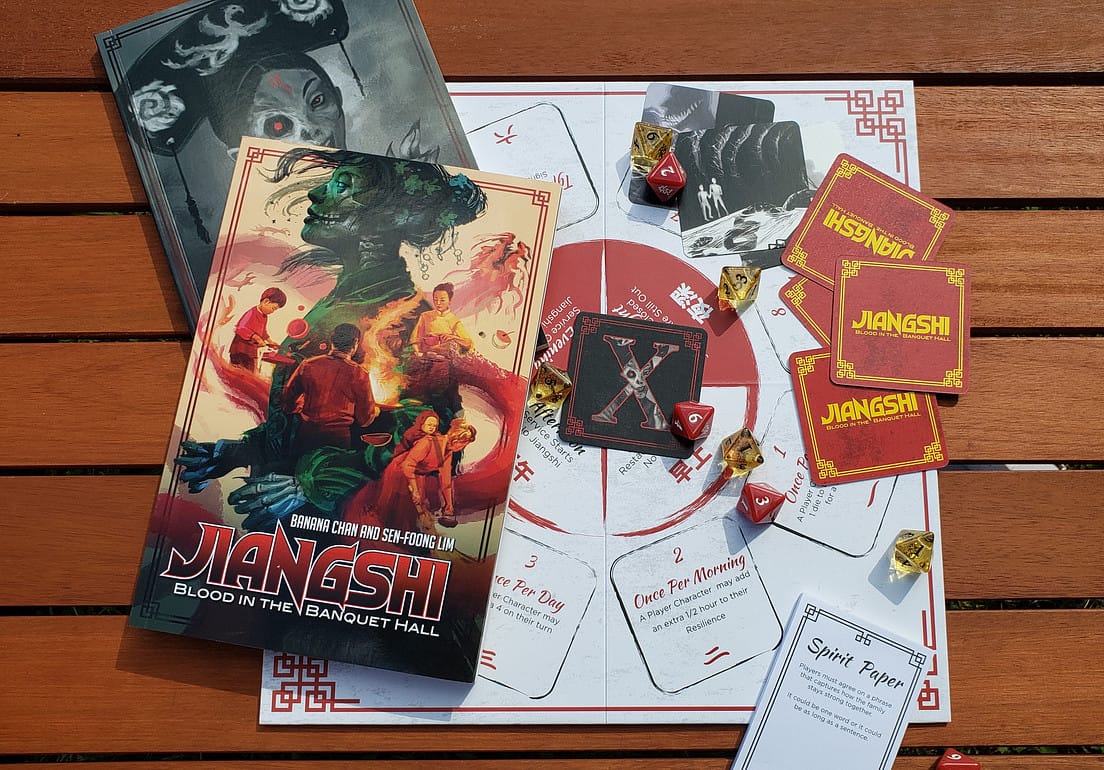
Board, cards, and dice for Jiangshi
So, we decided to use eight-sided dice because eight is lucky in Chinese culture, and we also had the addition of the four…, because four means death in Chinese… Players roll a pool of dice, and one to three is bad. That's a failure. Five to six is a medium success. You succeed, but there's a weird consequence for your actions. And then seven to eight is major success, with no issues and no weird consequences. You just success at the thing. And then fours cancel out the highest number. So, if you rolled a one, a four, and a seven, then the four cancels out the seven and your outcome is a one. So, ultimately, you failed the roll. And that was sort of what we were playing around with a lot.
We were going back and forth on dice mechanics. We were going back and fourth on character sheets. I love starting with character sheets first. So, I typically start from character sheets, and then create the other mechnics around the character sheets, because then, I feel like... It's sort of similar to screenwriting, where it's helpful for me to have my characters figured out first before diving into the details of the story.
So, once we have the characters. Once we have some semblance of mechanics, we had to create the campaign story, or the one shot story. So, we wrote our one-shot story or mini-campaign story, and we started playtesting it, based on what we already had.
And playtesting, typically I try to do it quick and dirty. So, it's just like, let's get it on the table, let's see if it works. Let's just continuously iterate on it and make sure that the notes get into the next iteration. And then we playest that version, and we keep doing that. Ultimately, it will lead to something playable and fun and hopefully make sense to everyone.
Then, let's start finalizing the document and writing these rules out — finalizing the character sheets, finalizing the mechanics, writing some lore, writing some flavor. Then, after a lot of iterations, a lot of playtesting, a lot of back and forth, we send it to our editor. Our editor will take a look, and we will go back and forth on it. And then we start looking for structural writers and artists and all of the more project management stuff, rather than the design and development stuff.
Specifically for Jiangshi, we were trying to find a publisher who could help us, because at the time, I didn't feel like Game and a Curry was at a place where it could tackle something as big as this. This was our first table top role playing game. We had never done table top role playing games before. We had only done board games. And so, I was a little concerned.
So, we decided to take it around. We pitched it to a few studios. They were just not interested. They were like, This is too weird. This is not really we're looking for. We don't know what this is. And so we were just like, let's find a co-publisher to publish it with, and we found Wet Ink Games. They were ecstatic to work with us on this. They handled a lot of the finances and the accounting, and they also did the distribution. And the talking to the production company. Whereas, we did a lot of the project management side, with our various writers and artists and helped with marketing and doing all of that stuff.
The production company we ultimately landed on... We decided to go with Whatz Games because we were familiar with them. Their quality is high. And this was also during the height of the pandemic. So there was just a lot fo stuff going on, a lot of costs were obliterated, basically.
It was very much powered by this labor of love. We just really, really wanted to make this thing happen. And I think we did a good job with it. We won a ENNIE Award, that's an industry award in table top games. And we were featured in Huffington Post, Forbes. I think that even though it was this really challenging game to make, it was something that really defined my career. I think that I wouldn't do any other way.
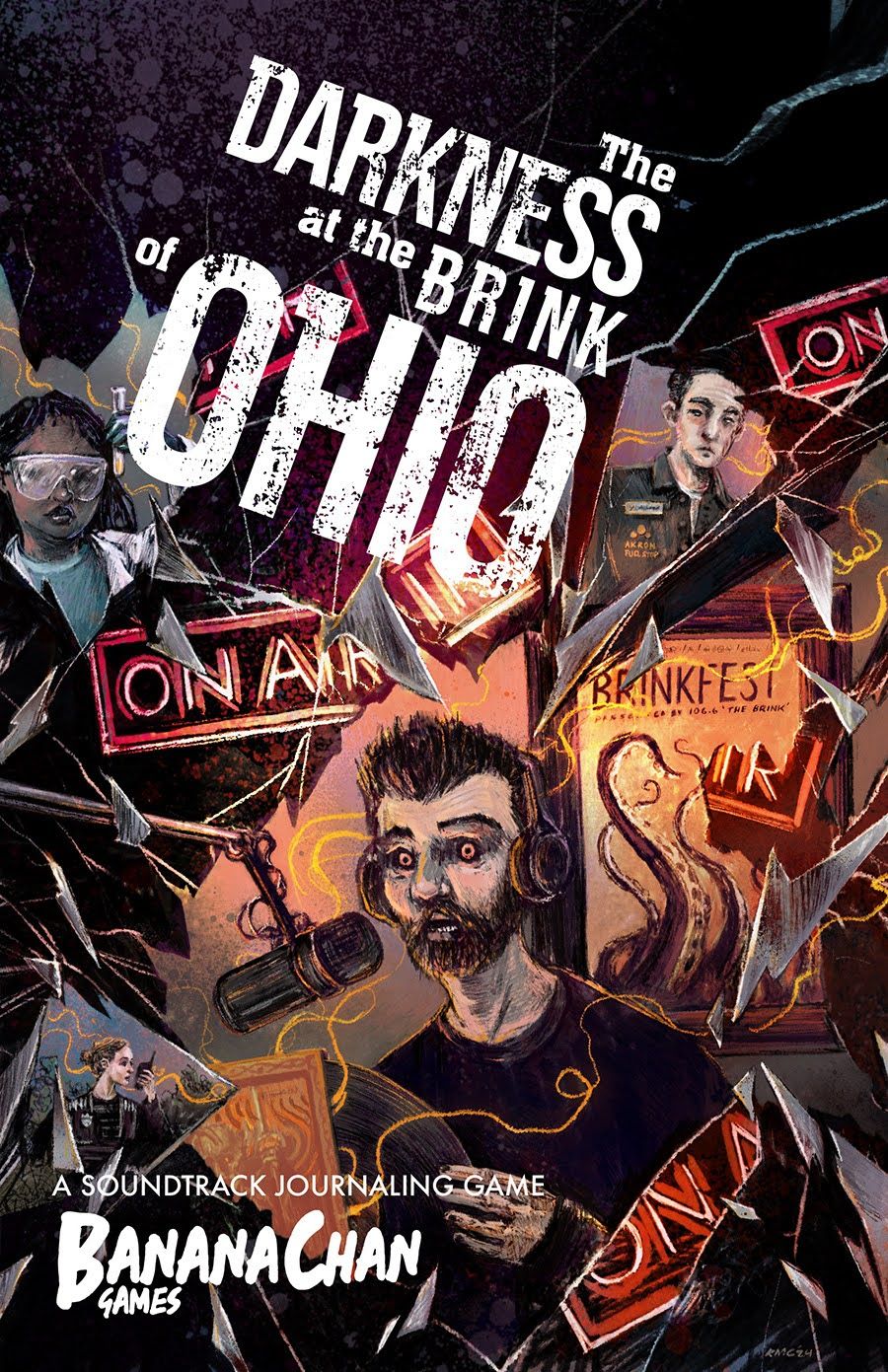
The Darkness at the Brink of Ohio was published in 2025.
One of your most recent projects is The Darkness at the Brink of Ohio, a solo journalling game. I'm always fascinating by journalling games. So, how did this game come together? And how does designing a solo game differ from trying to design something for a group of people?
It's so much easier. Like, designing for solo play is so much easier. And I think that's one of the reasons I've been doing a lot of solo TTRPG design. After publishing Jiangshi, and The Revenant Society and all these games that required a GM and bunch of players..., I felt a bit burnt out. Gathering folks, scheduling, and trying to playtest with 30, 40, 50 plus people is just too much…
And solo journaling games are great, because a lot of it is just writing stuff out and then taking a look at it, itterating it by myself, seeing if things make sense or not, and then sending it out to five or six different friends to be like, Hey, can you just playtest this? And each playtest doesn't require five or six people, it just requires one person. So, that's been so much easier and so much better for my own mental health…
Specifically for The Darkness at the Brink of Ohio, I was thinking a lot about parasocial relationships and how people of a certain level of success, they sort of view themselves in relationship with the fanbase that they're trying to build. I think this was very specific to a specific point in time, where during the pandemic, a lot of people were watching Twitch, watching Instagram stories, reels, whatever, and on YouTube a lot… And the people that were on camera and behind all of that online content, they were sort of building themselves up, and there was this inflated sense of success and fame.
Specifically in the table top industry, I felt like a lot of people felt like they were famous. They got to a point where they were thinking about themselves like, I'm famous, so I can do whatever I want. I can go to a party and, if someone didn't do something for me, and I can be like, Don't you know who I am?
And it got me wondering if I should write something about this. So, I started working on The Darkness at the Brink of Ohio. The DJ is this character who is a big fish in a small pond. DJ MIke lives in Akron, Ohio. He has his radio station. It's late night radio station. And he has his fans. His fans are frankly quite obsessive towards him, sometimes crossing a lot of boundaries.
And Mike has this interesting thinking behind that. On the one side, he really likes it. He's like, yeah, I want all of the attention. I want more poeple to like me. But on the other hand, he has so many insecurities about who he is that he keeps feeding into this, and he let's boundaries get crossed. He's sort of okay with losing himself, and he also doesn't want to leave Ohio. He just wants to stay comfortable in this little bubble he's created, because that's all he's comfortable with.
That was where the DJ Mike came from… And I decided at the time, I wanted to go back to some of the LARP stuff that I was doing, experimental LARPs where I was playing with soundtracks, playing with music, playing with weird mechanics. So, I wanted to create a soundtrack for the game.
So, I asked Aaron Catano-Saez to do voice over acting for it. I asked bunch of different people actually. I asked Jasmine Bhullar. She's ThatBronzeGirl and a GM on DesQuest, and I think she's been on Critical Role and Dimension 20. And I also asked my friend Danny Quach. He's like like my best friend, and he's marketing manager for Ravensburger. And I also asked my friend Austin Taylor. And I also became friends with one of the actors from Black Mirror. His name is Gavin Stenhouse. Fantastic actor… It was really exciting when we started working together, because he was just so into the project.
And in terms of music, I licensed a bunch of music from my friends. I wanted to make sure that we could get their music into something cool. And so, this is a perfect opportunity for me to do something like this.
I did all the sound editing, because with the video background I had, I thought I should just do some of the stuff myself. Obviously, sound editing is very different from video editing, but I did the best I could with the audio stuff.
Then, basically, I put this game around [soundtrack], and it’s about different characters listening to this late night DJ radio host go about doing late-night trivia. And over the course of time, he sort of evolves into something less and less human, and he completely looses himself by the end. So, yeah, it was a fun time.
The audio soundtrack is such an interesting element to add to that, for sure.
Yeah, if folks don't even want to play the game, they can just listen to the soundtrack as sort of a radio play.
Do you feel that the interactive aspect of games adds something to the horror experience? Why or why not?
I think that it's different with games, because you have agency that other horror media doesn't necessarily provide you. For example, if you're watching a movie you're sitting there watching the protagonist go through their horror experience and you might relate to the protagonist. You might relate to the events that are happening. You might enjoy watching all of that, but when it comes to agency, you don't have as much, just because you're sitting there and watching these events unfold…
Video games sometimes give you agency, but sometimes they're pretty streamlined in story telling. But with table top, I think you have a lot more agency, because you're given a set of rules. This is the system that you play with. This is the world you've built together, and you are able to make decisions based on that. When you're making those decisions, you do have to take into consideration the consequences of those actions. Is it going to make the story scarier, or is nothing going to happen?
And I think that when players are put into a horror game. They typically want to push, right? They want to make things scarier. They want to make things more horrifying. So, they can add that element in themselves, and it's a more collaborative experience with you and the other players. You're doing this together. It's like a writer's room, right? You're all just there doing it with each other, rather than watching things unfold from a third person perspective. And so, I think that that lends itself to a horror experience in a way where it's different from other media.
It's been challenging in the games industry right now. I know about it from a video game perspective with lay offs and studio closures, but I don't know as much from the table top perspective. In the midst of the variety of challenges on the market, how do you stay resilient?
Yeah, I think that... It's funny, because we were just talking about agency. I think that it is about just trying to find moments where you have control over what you can control, right? Obviously, things aren't easy in the world right now. There are a lot of different things that are really difficult in the world right now, and I think that trying to find moments of where you can control the world around you in your own life, that has been really helpful for me.
And understanding that, you know, you can still create. You can still make things. Nothing is going stop you from making things, other than yourself. I don't know, if you're trying to make a movie, that might be a little bit more difficult. But writing something is there, like anyone can just pick up a pen and write something or type something or whatever, right?
And so, reminding myself that there's gonna be tough shit that happens all the time. Right now, things are a little bit tougher than before, but if you can just find ways to work on something that you really care about and you find meaningful, then that gives you a little bit more..., it takes back more of your power, right? So, instead of feeling helpless, instead of feeling powerless, hopefully folks feel a little bit more powerful when they're making something.
As a final question and a way to pay it forward, what's something you've been loving right now? Could be games, movies, books, anything.
I love movies. I've always loved movies. I think, in terms of movies, I recently saw Weapons. But I also was in London in January and I went to this movie theater, called the Nickel Cinema. They're this very small, grindhouse movie theater, and I love going to a grindhouse movies theater. I just love going to them, because it feels like..., “cozy” might not be the right word for it. It feels, like, used, that feeling of this is a place that's not pristine. It's not an AMC. It's not something that’s mass-manufactured. This is something that a bunch of people decided to get a movie theater together and just play some stuff that they really like playing. And you can go and just sit there and watch whatever they happen to be playing that day.
And when I went to that theater, I found their itinerary for all the months that they had. I think it was up to March, and so I collected them and I started going through all the movies, cause obviously, I had to fly back to Seattle. I just took the time to take couple of hours of my week and just go through their playlist and watch it.
I think the last movie I saw was actually, Threads… For folks who are not familiar with Threads, maybe this is a bit of a downer, but I really enjoyed it.. Threads is about..., It's this movie that's sort of a documentary..., It's not really a documentary, but it was sort of this, this movie that was made in the '80s as a warning to folks about nuclear war, right? It traumatized a lot of people back then, because [it was] on public television… And so many people watched it, and it was such a dark story.
It was so interesting to see, because I could see that it influenced future, other horror movies later on down the line. I think that I saw a little bit of how 28 Days Later might have been influenced by the movie, a variety of different..., I'm gonna say Fallout. I made a joke on BlueSky the other day, where I said, If you like Fallout, you might like Threads. Two very different tones of movie, but I thought it was funny… But yeah, it was a very interesting movie. That was something that I saw recently that I was really inspired by, and that's movies.
In terms of games, I played Ten Candles with a bunch of friends. Ten Candles is a game where you are..., where you have a bunch of candles. You have ten candles, and you also have dice. So, as you're telling the story, as bad things happen, you have to blow out a candle. And once all ten candles are blown out, then that's the end of the game. Like, that's the horror, right?
And so there are different scenarios. We chose..., and maybe this is very on the nose, we chose an airport setting. It was like, what's the big bad thing that's coming after us? And we took it in a way that was kind of like this weird..., it wasn't like a cult, but it wasn't zombies either. It's just like people who have become mindless and they eat metal, so you would go down a hall and you would see people eating metal and in a little circle just chanting to themselves and you don't know what's going on. And they're the big bad, that's basically preventing you from escaping the airport.
That was really fun to play. It was pretty cathartic, I want to say, just playing it. Cause these are all the things that I'm terrified of right now. So, yeah, let's play it up.
Thank you for reading and spending a little of your precious time with me! If you’d like to support my work, you can subscribe for free or, if you are a generous soul, you can buy me a coffee.
I make games! You can play some for free on Itch. If you’re a game developer looking for a writer or narrative designer, please check out my portfolio.
I also write poetry! Find my books here.
Reply