- Infinite White Space
- Posts
- Women in Horror Month: Christi Kerr on Exploring Character Through Horror
Women in Horror Month: Christi Kerr on Exploring Character Through Horror

Andrea Blythe
March 24, 2026
Happy Women in Horror Month! All month long, I’ll be sharing interviews with women and gender-queer designers, writers, and creators making cool horror game experiences, with dark themes and interesting concepts. Find more celebrations on Gwendolyn Kiste’s blog.
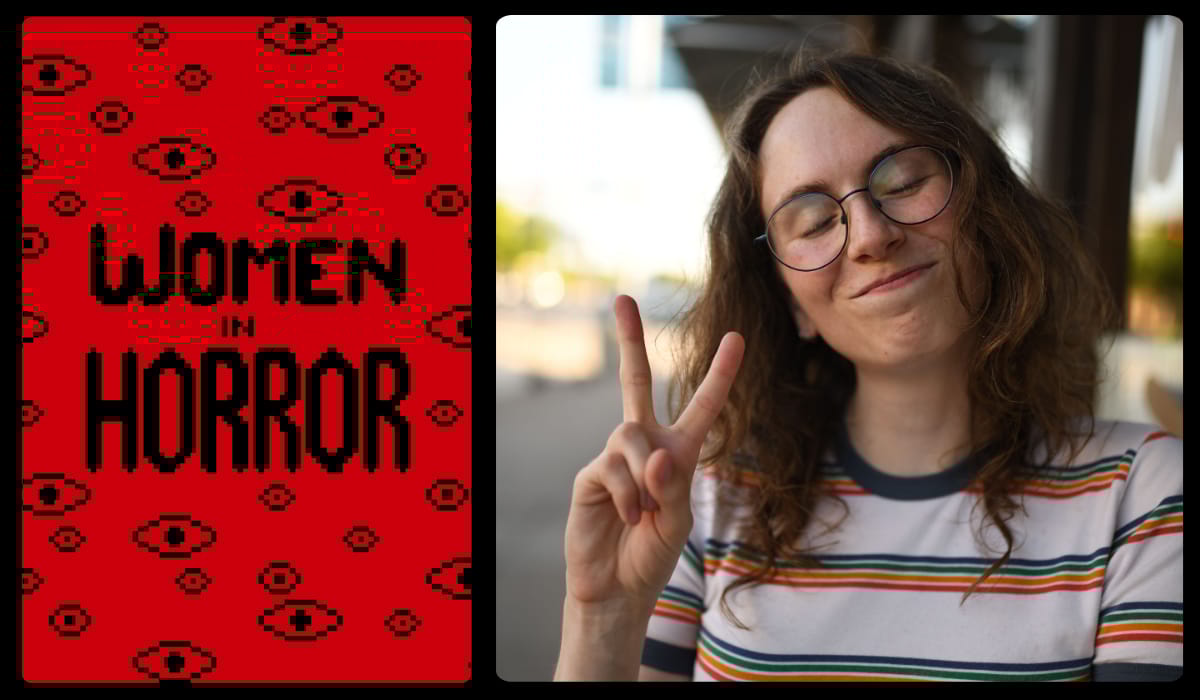
Christi Kerr is a writer and narrative designer on indie games spanning a wide variety of genres. Her love of storytelling is lifelong but her love of horror is more recent, on account of spending most of her life as a huge weenie. She lives in Austin, Texas with her dog, Calvin, and has approximately seven hobbies that she balances alongside her game dev work and a day job.
What was your pathway into making games? Was this something you always wanted to pursue?
It was not! I’ve been a writer my whole life, but writing for games always felt unattainable. But then I met my partner, who works in games, and I processed for the first time that real live humans make games and I could be one of those humans! So I quit my cushy tech job (which I don’t recommend!) and spent a year learning, creating, and experimenting with game narrative. I got incredibly lucky by meeting the right people at the right time at GDC and landed my first contract role on Letter Lost.
What draws you to working in the horror genre? How does it allow you to explore the stories and experiences you want to share?
My favorite part of horror is not the horrors themselves, but how the characters react and deal with them. Extreme events reveal a lot about a person, and while I would never wish that on a real human, I looooove seeing how different characters cope with the Horrors and the strategies they use to make themselves feel more safe in an extremely unsafe situation.

Managing an eerie post office in Letter Lost | source: FlatNine Games
One of the projects you worked on is Letter Lost, an eerie post-office simulation game from FlatNine Games, which is set in a world of haunting mysteries. What drew you to working on this game?
I mean, a million things, many of which I cannot talk about yet! But, to be vague, I was particularly excited about the level of branching within the narrative. It’s so fun to brainstorm all the ways a player could interact with a certain narrative element of the game and figure out how all those ways affect their individual story and their understanding of the mysteries in the game.
What has been your process for developing interesting post-office patrons for Letter Lost? How do you build out a character when you might have limited time to express their story?
Generally, my lead comes to me with a character concept and the basics of how they interact with the game’s narrative throughline, and then I just get to expand on it however I want. With every character I’m handed, I like to determine their enneagram type — which I wrote about in inkle’s The Game Narrative Kaleidoscope — in order to understand their basic desire and fear. Knowing these means that I can quickly cut to the heart of their personal story, and can ensure that each branch for that character is focused on their core themes, regardless of how much time the player spends engaging with them.
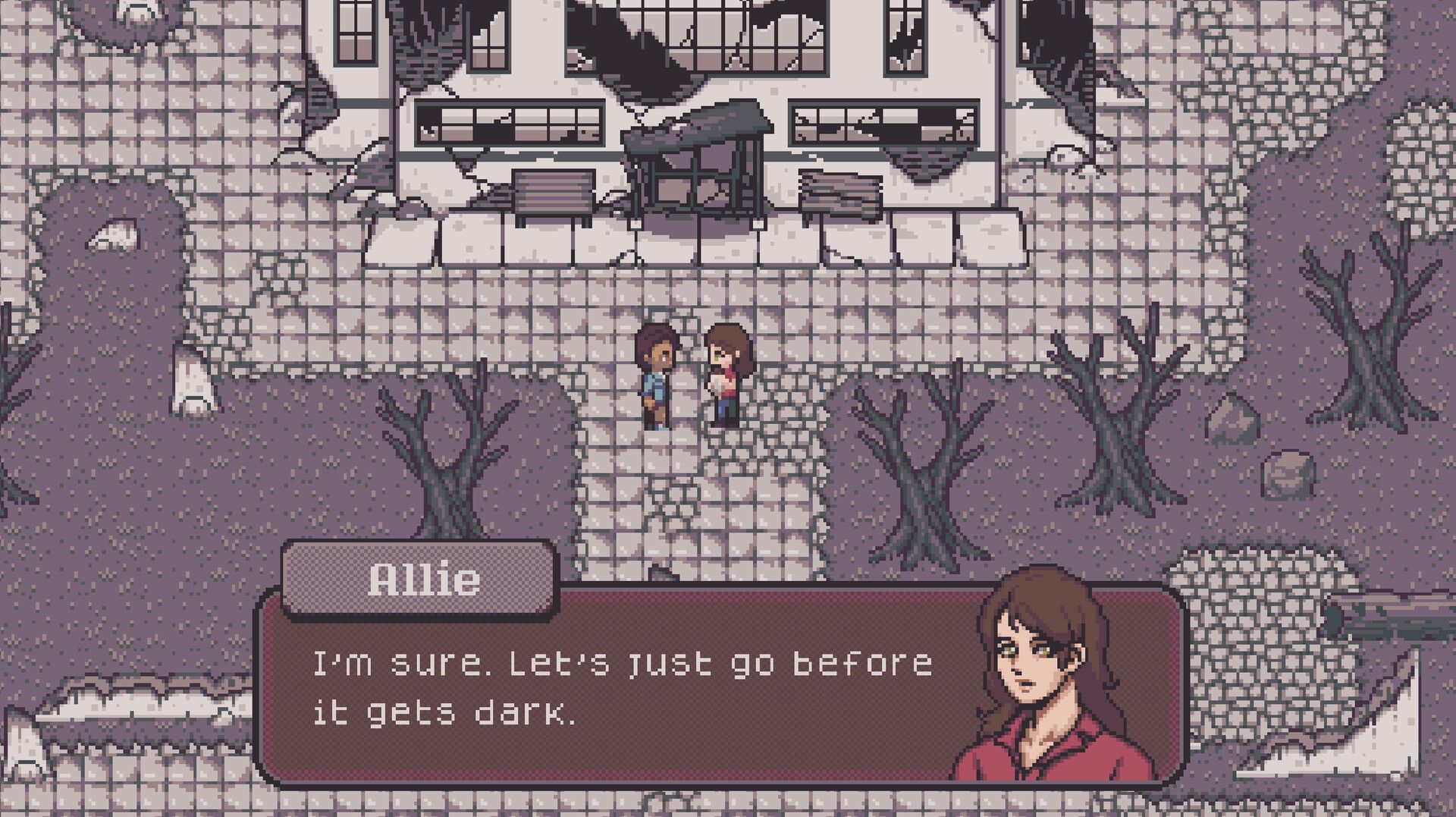
Red Rain | source: Small Loan Studio
Another game you’ve been working on is Red Rain, a post-apocalyptic role playing game from Small Loan Studio about a mother raising her daughter in a broken world. Your work on this game has included crafting item and environmental descriptions. How do you approach this process to ensure these descriptions help add to the player experience?
My top priority was keeping them short. The player should be able to scan the text in a split second and then get back to the gameplay. Beyond that, different item/environment descriptions required different considerations. Some needed to convey a detail that isn’t clear in our pixel art style, others were for adding extra context that the player character knows but the player doesn’t, etc. But I took care to ensure that every description used evocative language to reflect the desired player emotion for that moment in the game, whether that was fear, sadness, comfort, etc.
Small Loan Studio is a volunteer-run studio that aims to help game developers accelerate their skills. What are the benefits of working on a volunteer-based team?
I honestly don’t love calling teams like Small Loan Studio “volunteer-run.” To me, the term implies you’re doing work for the studio, when (ideally) you’re doing work with the studio. The project should exist to serve the developers and their career growth, not the other way around. I say this because I used to be part of a volunteer studio that did feel more like volunteering than collaborating. And that’s when these situations turn toxic and exploitative.
But, to answer your question, unfunded games made with peers have huge benefits: work samples for a portfolio, learning to work with other game devs, and having a shipped game under your belt, to name a few. In environments like Small Loan, where everyone takes the project seriously and respects each others’ contributions, you can learn a ton. Just keep an eye out; if you feel like the project is more about one person’s vision than everyone’s collective development, it might be exploitative.

On your website, you note that The Hollow Mirror is your passion project. What can you tell us about this project? Why does it excite you?
The Hollow Mirror originates from a Dungeons & Dragons campaign, actually. My character in that game was undead and had no memory of her life, and early on the DM hit me with the craziest backstory reveal that tied her previous life into the overall plot perfectly. The campaign fell apart soon after, but I got the DM’s blessing to continue exploring my character’s story in the form of interactive fiction. The project has evolved significantly since then, but the core themes are pretty much intact: identity, propriety, and independence in a vaguely 1800s gothic horror setting.
As the last few questions indicate, you’ve been working on a number of projects at once. How do you balance collaborating on multiple projects at once?
And that isn’t even all of them! Honestly, the best tools in my toolkit for balancing all of my projects are 1) getting enough sleep every night and 2) generally taking care of my mental health outside my creative pursuits. When I’m well-rested and completely present with my work, I thrive on bouncing between projects! I know it’s not for everyone, though, and that getting enough sleep and keeping my mental health stable are privileges that not everyone has control over.
Do you believe the interactive aspect of games add something to the horror experience? Why or why not?
Absolutely! There’s nothing more horrifying than the results of my own choices! Games like Slay the Princess do this exceptionally well; I can make what I feel are rational, thoughtful choices, and then watch as they lead directly to highly specific horrors I never could’ve imagined.
The games industry has faced a number of challenges in recent years, from layoffs to lack of funding. It doesn’t seem to matter if you work at a major company or an indie studio. Times are hard. How do you remain resilient as game designers in these challenging times?
I owe a huge amount of my resilience to my day job. Game dev doesn’t pay the bills for me (yet?) and having a day job that’s relatively low stress gives me the stability and peace of mind to bring my full creative self to my game dev. It’s definitely rough out there and I know good day jobs can be almost as hard to find as game dev jobs, but I would encourage folks who are struggling to not view taking a day job as a failure. It doesn’t make you less of a game developer.
As a final question, let’s pay it forward. Are there any horror games, movies, or books that have inspired you lately?
The Excavation of Hob’s Barrow is so special to me. I can’t recommend it enough.
But beyond that, I’ve been especially interested in queer young adult horror novels lately, such as Camp Damascus by Chuck Tingle and The Spirit Bares Its Teeth by Andrew Joseph White. If anyone reading this knows of games that capture this same energy LET ME KNOW.
Thank you for reading and spending a little of your precious time with me! If you’d like to support my work, you can subscribe for free or, if you are a generous soul, you can buy me a coffee.
I make games! You can play some for free on Itch. If you’re a game developer looking for a writer or narrative designer, please check out my portfolio.
I also write poetry! Find my books here.
Reply