- Infinite White Space
- Posts
- Women in Horror Month: Larysa Irene Hrabowych and Anna Wolff on Building Community Around Creative Passion
Women in Horror Month: Larysa Irene Hrabowych and Anna Wolff on Building Community Around Creative Passion

Andrea Blythe
March 19, 2026
Happy Women in Horror Month! All month long, I’ll be sharing interviews with women and gender-queer designers, writers, and creators making cool horror game experiences, with dark themes and interesting concepts. Find more celebrations on Gwendolyn Kiste’s blog.
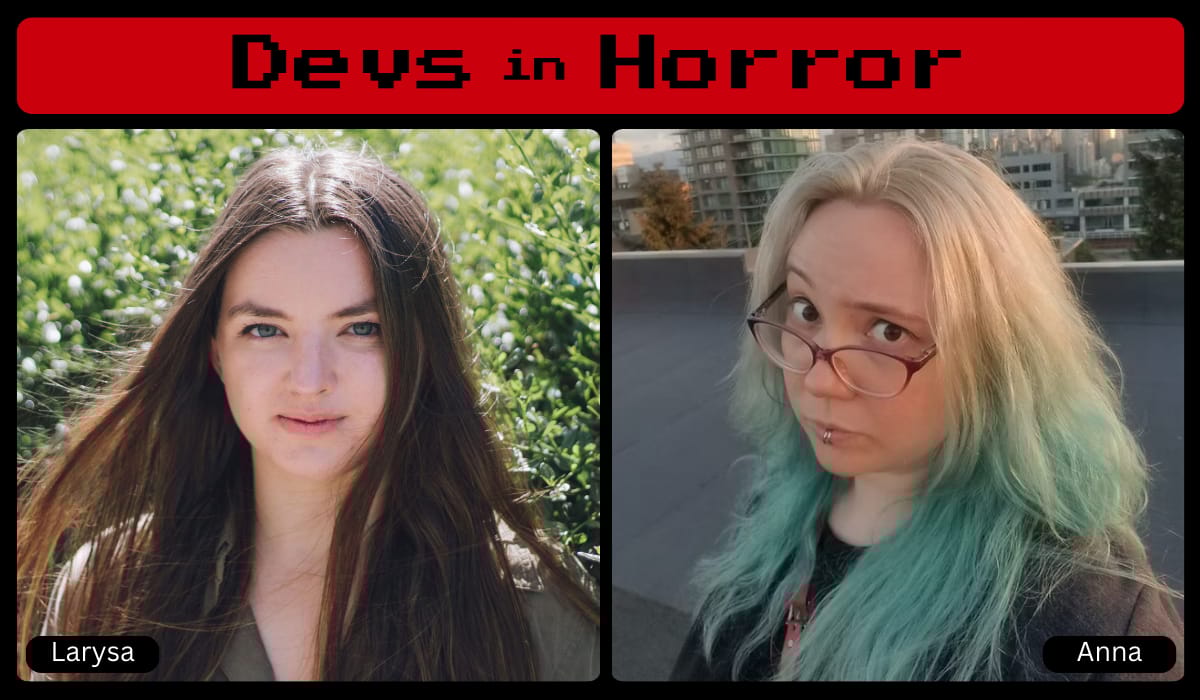
Larysa Irene Hrabowych (they/them) and Anna Wolff (she/her) are the cofounders of Iklo Studios, which is working to develop the indie horror game, Stika.
Larysa was born in Canada, raised in Europe, and connected deeply to their Ukrainian roots. Holding a Master’s degree in Digital Media, and an avid gamer since childhood, they got their start in the games industry at Relic Entertainment as a narrative designer for the Age of Empires IV campaign team. Since incorporating their newest venture, Larysa’s writing and design have helped win grants and have drawn the attention of various showcases. Bringing the world of Stika to life to support Ukraine is their greatest honor.
Anna is a 2D artist who loves dark, high-stakes stories in indie comics, games, and film. On Stika she keeps the developers supported in all their tasks with clear direction and coordination, while encouraging them to chase their inspirations. She has training in commercial animation from Capilano University, and a Bachelor’s in Interactive Art and Technology from SFU. For years, Anna has been a character designer in games, and more recently she has worked as an art coordinator in film and a graphic designer in marketing.
Stika, (which means a watch or guard kept at night) is a stealth horror game about a young teen at a Ukranian summer camp. During the night strange things begin to happen, and the player is tasked with exploring the camp, solving puzzles, and using their detective skills to solve the mystery of what’s going on.
To learn more about the game, visit its Steam page.
Note: This interview was recorded with each developer on two separate sessions, and I’ve combined their answers together here into a single interview. I’ve also shortened a few answers for brevity’s sake.
What was your pathway into making games? Did you start in another creative discipline and transition?
Larysa Irene Hrabowych: Yeah, so, I was a big gamer in my youth. It was sort of what my dad used — you know he had two daughters and me, is how I like to put it. We wouldn't let him coach us in sports, so he got us video games in order to connect with us on that front, which is a very father thing to do.
So, I was very into gaming ever since I was a kid, but I never really thought of it as a career path. I sort of went into tech and general media. I knew I really liked working with computers, and I did computer science in high school. But I was hugely into design and writing, so I always kind of envisioned myself working with computers and somehow trying to figure out how I could put story into something that I do.
Obviously, the nature step would be games, but I think when I was an undergrad is when Gamergate was at its high. So, I was literally in my first ever game design class, and I was like, Oh, this is a career you can have? Oh my god, maybe I should do this. This is perfect, marrying all my favorite things — and then Gamergate exploded. And I realized that maybe this is not the industry that will support me the best? And I was very discouraged, like I can only assume a lot of women and nonbinary and gender queer people probably were.
Yeah, I was a little discouraged, so I fell back into, like, I'll just do marketing or maybe film stuff here and there, because I was really into video editing, too. And so, I kind of worked freelance for a little bit.
Then, what got me back into it is I did a master's degree in digital media, and I got headhunted by Relic Entertainment. I got to work on [Age of Empires IV] as a writer and narrative designer, and the campaign team was so welcoming and supportive. The narrative director at the time was this amazing, kick-ass woman, Lauren Wood, who basically took me under her wing and showed me what the games industry could be and how many great people there are in here, and how there is a future for us in the games industry.
So, I got really inspired by that and I just, you know, kept going. Because when you have that kind of opportunity, you don't say no.
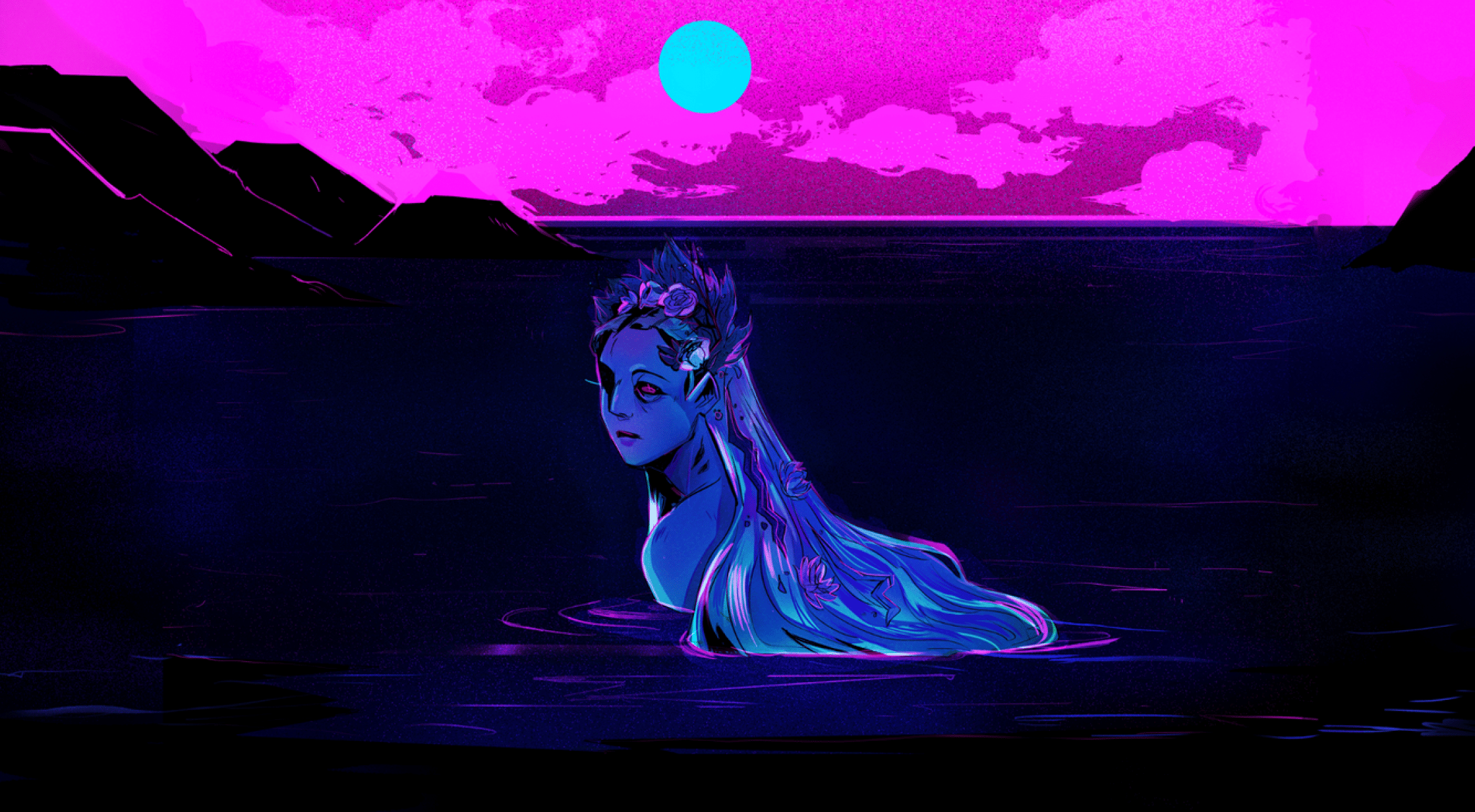
Cover art for Stika.
Anna Wolff: I got trained in commercial animation and so at first, well… okay, I as a kid had a tendency to invent massive projects, always creative. I made a bunch of comic books when I was like in grade eight and seven and tried to sell them… but they were really cute, you know, kind of early teenager comics. So, I have all of those, but I basically like did a lot of exploration on my own in creating projects, and I came out of that experience being like wow, I really want to work with other people.
So [first], I did the training for animation and I had a hard time breaking in. It was just kind of a tight time and I ended up finding my way into games instead. And that actually came through SFU [Simon Fraser University in British Columbia]. I ended up getting hired by Silverstring Media, which are a very briliant little CMF [Canada Media Fund] focused group that are local to Vancouver that also produce very interesting queer, strange, intellectual kind of games. Their most recent one I think is about like, I don't know, being a necromancer that's raising plants from the dead. You have like a garden of cute dead plants. Like it's very introspective stuff.
So yeah, so I've been like a 2D artist in games doing character designs for a long time and I sketch quickly. That's kind of a lot of it. Like, I end up in the very front end of the process most of the time. If it's indie, that's less structured. It's usually just working straight on with CEOs to take like a word idea and turn it into a concrete visual plan. Like that's a lot of what I do.
But I've also done like full character sets and stuff for different games as well. So I'm very happy doing some of the buckle down, just get it done kind of artwork. And that's something I'm doing on Stika. I'm doing most of the 2D decoration and the character designs as well. But I'm also really happy just in that design mode.
And I feel like I am happiest when I'm working with somebody because I can help sort of bring out their ideas, their experiences, their visions and stuff into… I don't know, I'm very developed in my art style. I like dark stuff… a lot of my stuff is kind of like hunkered down, dark, a little tired.
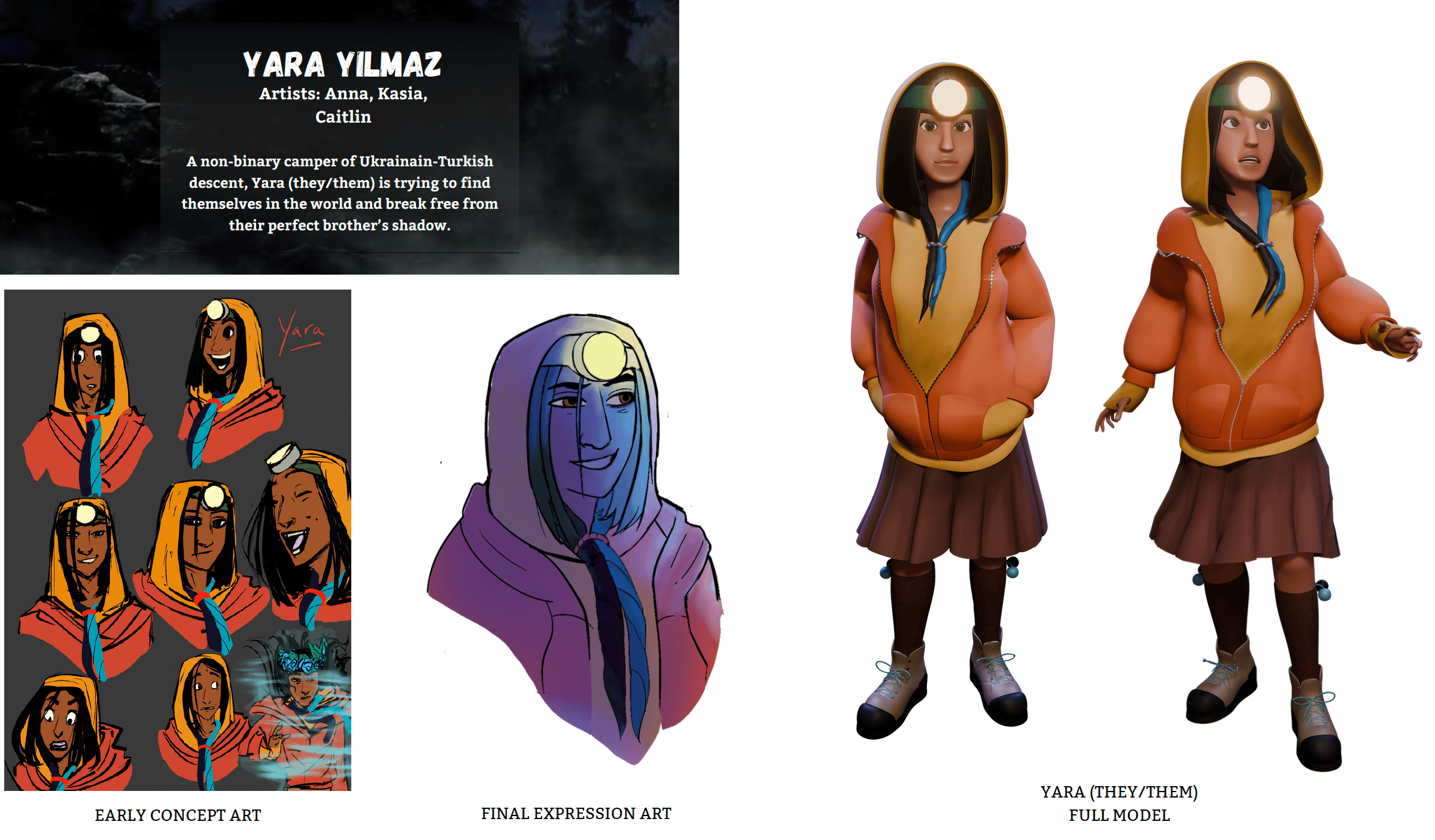
Concept and model art for Yara (they/them), the main character of Stika.
Iklo Studios was formed due to layoffs at a AAA company. Can you talk about what happened and how you charted a path toward founding your own studio?
Anna: Totally. Iklo, as a corporate entity, actually came into the fray a little later. Because first what happened was, we basically made an art collective, is kind of how I would think of it… Larysa was doing narrative design on Age of Empires. I was in QA [quality assurance] and one of their other games, Company of Heroes.
But yeah, basically, they had this mass layoff, 40% of the company in one day… with lots of people who'd been there for like 20 years. They cut all communications, all Slack. And it was like a big community. So I just kind of got off work that day, went home, made a Discord server, left it open, and sent it to everyone in QA. And then QA sent it to everyone else. Very quickly, of 120 people who were laid off, we had about a hundred. It was really crazy to see.
Larysa: We were all kind of post-layoff, peak of all this happening, and the great shakings in the games industry. Everyone's terrified, and we all created a little community, where we were all just chatting and sharing stuff. So, people were kind of noodling on passion projects that they've put on the back burner, because non-competes are watertight usually in the AAA space. So, we kinda got to kick around ideas that some people had been noodling on for years, but could never do anything with and now had the opportunity to share that and noodle on it some more.
We have a really great community vibe, and the community still exists to this day, which is really nice. And we're all, you know, any time there's a lay off, it gets shared in that discord, and we all commiserate some more. But it's also a really great space where we're uplifting each other and finding each other work. And if someone got laid off in that community, we're immediately helping each other out and seeing what we can do and who we can connect with who.
But it was in that space, where I kinda dropped my story in there and went to sleep. And the next morning, I woke up to hundreds of missed messages from these devs, just all being inspired and throwing in ideas for mechanics and level designs and maps and story. We kind of looked at it, me and Anna, and we were like, I think we have something here. And we kind of just took it and ran with it.
It started off... it was supposed to be just a small little portfolio piece. It has since snowballed and now we're a full-fledged studio working on it. And we had a grant and we're still getting some momentum from that, too, and it's just been all around a really great experience. But yeah, it came from this mass layoff and really centered around community organizing, and also charity, because we all unified behind raising funds for Ukraine, a cause that's important to me as a person of Ukrainian descent. So, yeah, 10% of everything that Stika makes is going to be given to Ukraine to help its fight for freedom.
Anna: So, [we have this] kind of this continuous trickle of professionals who would like, join us. And then a lot of the time — we're talking people with kids and stuff — so, they were back in real jobs real quick. If there is one big challenge for this project, I would say like one of the hardest things has been that people come on, they do some work, either volunteer rev share, or paid, and then very quickly they get hired. It's something where we are encouraging people to move on with their careers as soon as they can, just cause we didn't start with financing.
… So, that was the beginning and then we just kept trucking along and it no longer was just people from Relic. Very quickly we started getting all sorts of interested devs. We met people, I don't know, in kind of in all these different situations. We had a lot of people approach us, I think largely because of the Ukrainian culture component.. and the interest in kind of doing art and doing activism at the same time.
I think at this point we're no longer super, like, we're still in that Discord, but we've moved on. We have our own Discord. We're very much our own little entity at this point. And people do tend to just contact us out of the wild internet being like, I love your project. I would like to do stuff for you. And then we negotiate with them to sort of see what we can do.
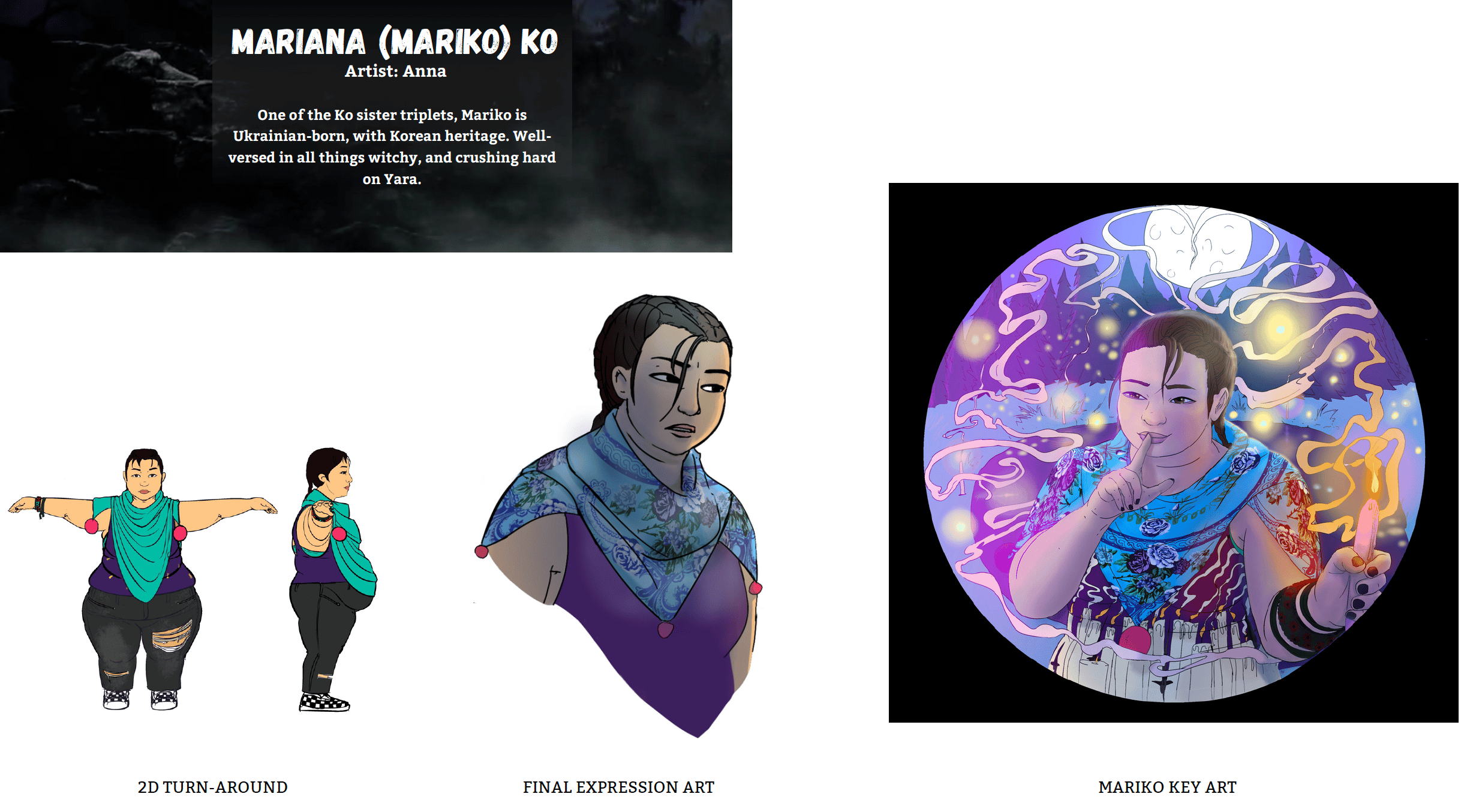
Concept and character art for Mariko (she/her), one of the side characters in Stika.
Stika is based on “a true story that happened at a Ukrainian scout camp in 2012.” I’m so excited to hear that story and how it inspired the game as a whole.
Larysa: I'm not going to spoil anything… but the true story is similar to what we have in the game — obviously with creative license and when you're making a game, somethings have to be left by the wayside and some things have to change in order to make the experience better for gamers.
Basically, I have been a scout, a Ukrainian scout, specifically, since youth. They are their own branch of scouting, and we are very big into our heritage and culture and folklore, and it is a wholly unique kind of thing. We're not like a branch off of Boyscouts of America. We're a wholly unique unit.
Yeah, so we had a big jamboree, I believe they're called in English, where basically Ukranian scouts from all over the globe come and meet. And I was on my stika, which "stika" is a word we use for your night watch duty. Every night a different group gets selected for the night watch, and you kind of rotate through, like, okay, you'll take 10 p.m. to 11 p.m. and wake up the next person from 11 to midnight.
I decided to throw a little secret party with my friends on my watch at 2 to 3 a.m. in the morning, so I woke up for my shift and everything was already missing, like all the stuff I was supposed to be given was gone, and camp was sort of in disarray. So, I kind of went about my duties and then my friends started arriving, and I told them about all the weird stuff that was happening and they all were like, Oh my god, let's go investigate and run off into the woods alone. And I'm like, No, please don't do that.
So, I spent the night basically herding cats. They would just keep going off everywhere.
One of the stories I can tell you and might be featured in the game. We found a guy from the camp sleeping in the woods. And we were like, What are you doing here? And he was like, Oh, I don't know how I got here. And we're like, What do you mean by that?
So, I think the way that the story goes is that either people were messing with me and having fun and trying to get me on edge, or something was actually happening. But it all culminated in, at the very end of the night, one of the girls, who had gone off for a long time, I found her down by the water. And I ran up to her to ask her where she had been, and we both look out to the water and there's a woman standing there naked. [She was] like waist high in the water, singing at us — and I grabbed my friend's hand and noped the fuck out of there. And ran her to the shore, and when we turned around, the woman was gone.
So, we have no explanation for the woman in the water. Everything else could be explained by people were messing with me, but the woman in the water, who was naked at 3 am was a little bit harder to explain. So, yeah, I think I saw a rusalka and lived to tell the tale.
Anna: I mean, I sat with Larysa and I heard that story and I was like, This is great. Then, the second time that I heard it, I was ready to go and I was, like, okay, uh, I'm typing this down. And so like I typed the whole story with Larysa, completely accurately first. Then, we did a pass on it and we started talking about like, how does this read as a narrative?
It’s a lighter campfire story, but as soon as you dig in, each of these people is a real person. All of these events and contexts were real things. And so like, you can just dig infinitely into this story. It's compelling. It's got a Ukrainian folklore monster in it. It's got chaos and madness in the night. So, I think we really did carry forward the vibe of the story… but then we did our pass and, you know, made it a little more coherent.
And then we did a um, and we did a pass on all the characters, and the character work was amazing, to be honest. Larysa did a lot of research into different diverse groups in Ukraine that were… not white and underrepresented, especially in media. So, we took a lot of that inspiration, [and] we built up from there.
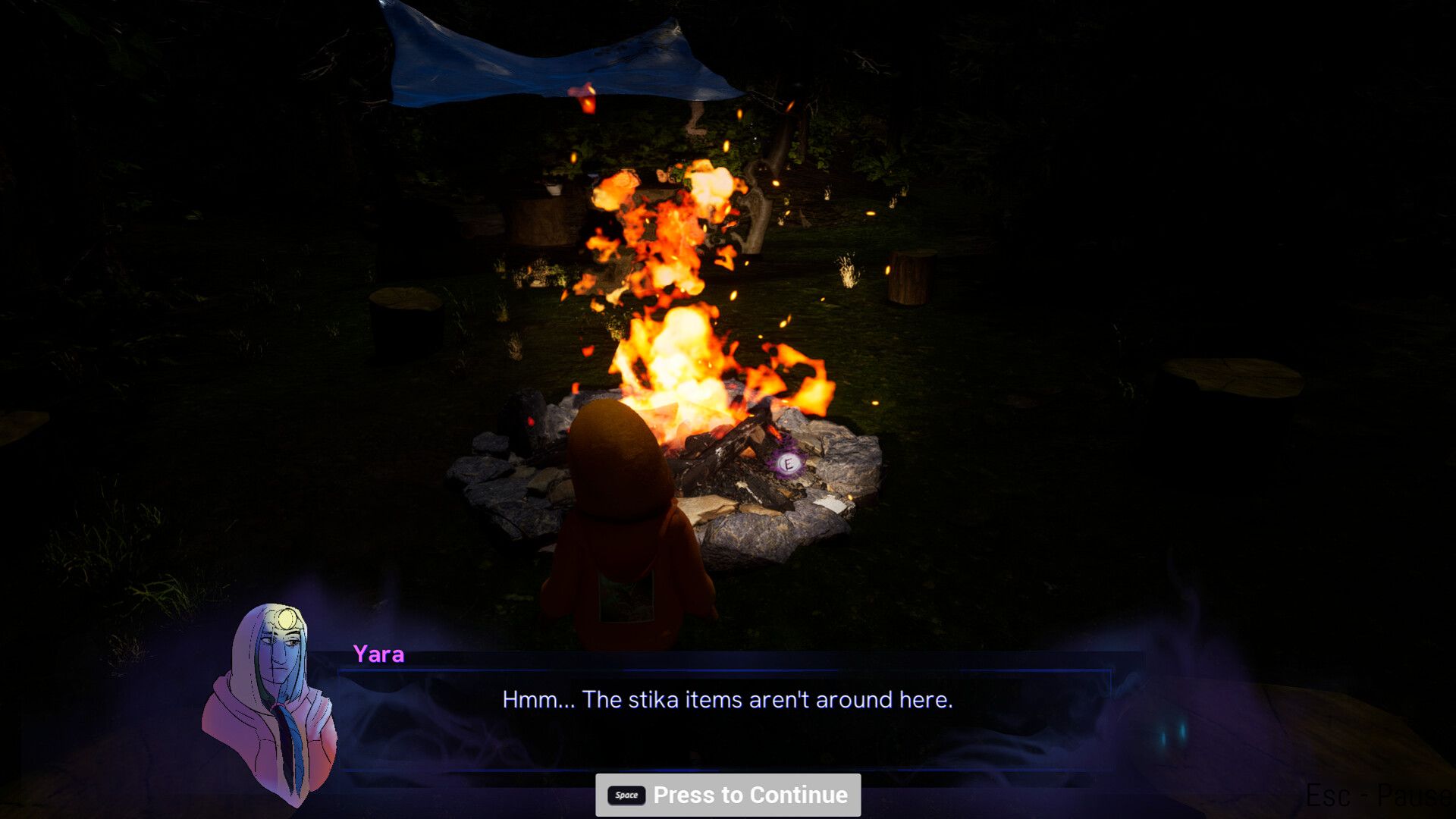
A moment of dialog from Stika.
Stika also draws heavily on Ukrainian folklore, like the rusalka. What is a rusalka and what makes the folklore good for horror?
Larysa: Ukrainian folklore is so interesting to me. Especially being raised in it and having it be really close to my culture, it was always a well for inspiration and thoughts and imagination. So, I have always been really inspired by it, and it's so fascinating for me, because the rules of it and the nature of it is very different from what people are used to. The closest one-to-one that I use, especially for devs who are come into it not familiar with it at all, is that a lot of Ukrainian folklore is sort of... not necessarily beasts and monsters that will hunt you in the night, but more aligned with the Celtic fae, in which they exist and they're out there and we respect them and can maybe see them sometimes, but we know to stay away, because they will mess with you. It's sort of like, don't.... They will leave you alone for the most part, if you're a good natured person who isn't harming anything in the world around you, but if you mess with them, they will mess with you back way harder. So, you're always taught to be wary and not necessarily afraid.
Again, the best thing about Ukrainian folklore is that it's very mutable. Every village, every region has its own tale of the rusalka, and so depictions of them and what they are... some are more nymph leaning, where they are just water nymphs, while others are very much siren-esque, undead beings of just pure revenge. There's a rich repository to pull from there, because when you're making a game based on real life and folklore, you're going to have to sacrifice some things for gameplay and narrative and more importantly scope. When you're doing that, it's important to have that rich repository, because you can pull up things that work best in the story, and that serve the story best. So, it's still true to the folklore, it just might be a mix of different region's tales.
But we really are still trying to honor as closely as possible the true folklore behind the story. And the thing that make rusalkas so interesting for horror is their proximity to death. Most of the time, they're born from people who have been drowned, people who have been murdered by drowning, and they become this creature that haunts the location where they were drowned and try to coerce and draw in other people to their death, or create more rusalkas.
So, they're often portrayed in history as what remains after gendered violence, and they essentially function sort of as a revenge fantasy and sort of as a warning. You know, don't drown women or they'll haunt you for life. Well, you know, don't drown anyone, really.
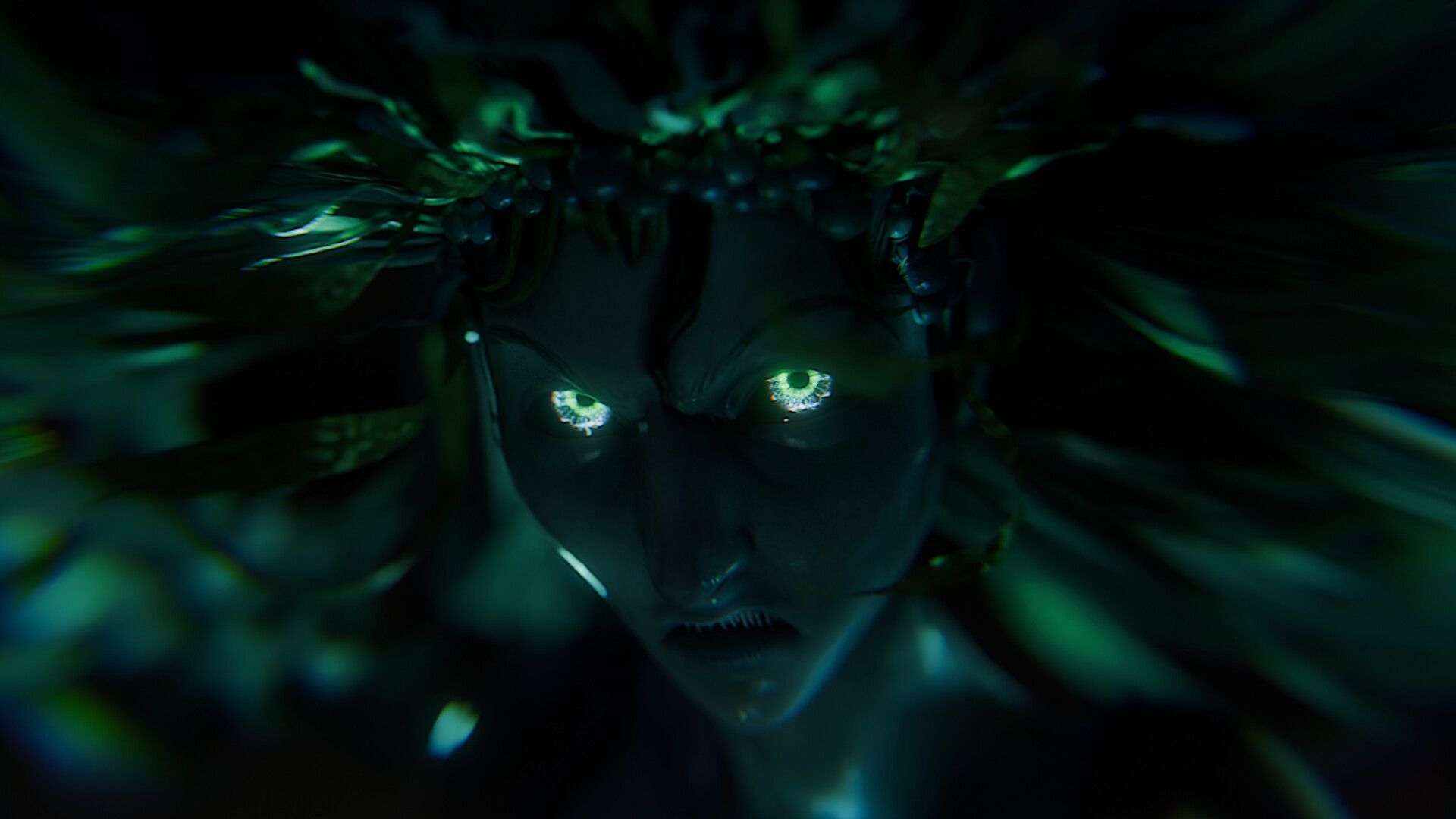
The rusalka in Stika.
Anna: Oh my God. It's been amazing. I mean, I love both the rusalka and the mavky. I think learning about the mavky was maybe one of my favorite pieces…
We're interested in looking at how, systems of oppression are pushing women and also other, other queer groups. Our main character is non-binary and is interacting with the rusalka, which is this, this gendered legend. So, there's a lot of exploration around gender and coming out… and we're working hard to make the monster narrative empowering, which is often, I think something that is done with monster narratives and queer narratives, where it's kind of an exploration of why this perceived monster is actually pretty okay.
And, with the mavky, they're actually also a very interesting gendered exploration. They are wood nymphs. Essentially, they are spirits of the forest, and they are traditionally portrayed as naked young women who then beguile you and draw you into the woods and who knows what happens then.
Like most Ukrainian myths, they are not innately evil, but they can be dangerous, especially if you mess with them… Something that we chose to do with them is, although they appear feminine, they have a totally non-binary culture. So, they're just like, the sleepy one, the annoying one. Oh, you have to go get berries for the hungry one.
So there's an exploration as well around… basically just that like the perception of female bodies as gendered before you even know them kind of thing. And we wanted to disrupt that and explore a different avenue.
One of the stunning elements of the Stika teaser trailer is Korinya’s haunting music. Can you talk about your collaboration with Korinya on the soundtrack for the game? What drew you to their work?
Larysa: They also were part of the same Ukrainian scouting organization. And I met them when I was young at a couple different events and festivals, and I was also friends with Alina Kuzma, one of the lead vocalists and bandurist, which is the folk instrument. So, I communicated with her, and she put me in touch with the rest of the band, and we got license to use their music. And from there, we've just been really inspired.
Like, I don't know how to recommend finding a band like that, like just be friends with people. Have good friends.
No, I just think that they're sound was always really inspirational to me. And sharing that with the devs is so fun, because I will hear them listening to the music while they're working sometimes, which is really cool. Everyone has their favorite of the tracks that we got.
When you're designing, there's all these elements that are going into this stealth horror game — gameplay, art, level design, and narrative. How do you make sure all of the elements fit together into a cohesive whole for the player?
Larysa: Yeah, so this one, I think what really helped the most is the story, because we all unified behind it initially. So, we kind of all have that same entry point. When you're designing any kind of experience, you have to decide on the focus and make sure that everything orbits around that. Since the idea for Stika is based on a real-life story with a huge gravitational pole, with people just coming in and being like, This is awesome. Let me do UI for you. Or, Let me do maps for you. Everyone is really getting inspired by it, so it's easy to get everything really revolving around that.
Early on, we realized with the story that stealth mechanics probably made the most sense with our story and characters. And so, our two big tentpoles, for a lack of a better word, are going to be our story and stealth. We make sure that everything revolves around that.
That doesn't mean that we haven't been thinking of other random things we can throw in there, or fun things, or being inspired by other games to throw in mechanics that probably don't make the most sense for the experience. We call that “DLC.” Everything that we think of that we really love and sounds fun, but probably doesn't work behind the unified vision, we just shove it into "DLC Land."
Anna: I think at the start, especially, it was very much me and Larysa holding all of the knowledge all of the time, which mostly worked, but it became exhausting when people were coming onto the project a lot, and we didn't have a team that was doing any kind of onboarding. It was just us all the time. So, we would tell the story over and over and over again.
But since then, yeah, I mean, I think we've moved towards just having a very, I think kind of typical structure for game management, you know, with a GDD feature list. We’re developing stuff as we go, focusing on kind of a minimum viable product first and then building out…
We kind of just work on a [priority] system. So, whatever's on fire [and needs to be focused on] to try and hold the narrative and the whole piece together, we'll start there and we'll make sure that that's working well. And then we'll work on our extra scope pieces as we can.
I would say that very often there's a team of maybe five or six that are very active on the project at all times. And we have a larger team with the people who are pretty active — I'd say about 20. We're willing to take on all sorts of artists, all sorts of different developers, with basically different time needs. Very often the really, really high [skilled] people have a short amount of time, and can [only] do one thing really delightfully. And then they become basically mentors for the whole team.
I've been really pushing to try and get people set up with mentors as we go, so that when people come on, the first questions I asked them were, What are your specialties and where do you want to go? And what do you really want to experiment with that you haven't been able to? And I get those answers, and then if for the last one, if somebody is low skill in an area, but really wants to learn about it, I try and pair them up with anyone I know who's high skill, who's on the project.
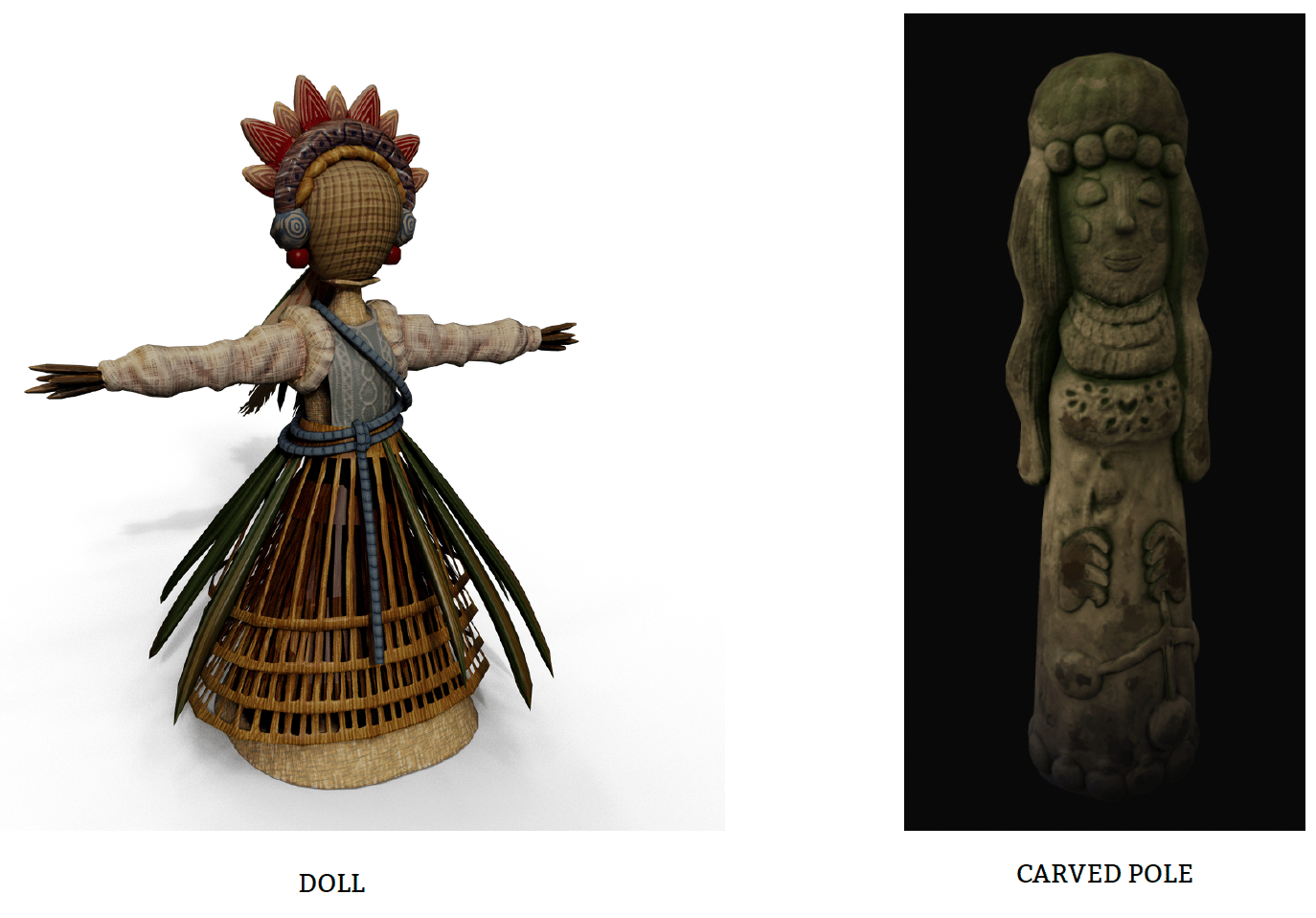
A couple of creepy objects you can interact with in the game.
That's kind of a wonderful inbuilt training for entry-level people trying to gain skills, which is so lacking in the industry right now.
Anna: Yeah. Well, and the other interesting thing that I would say is that the juniors built this project. Because of this system, the juniors have gone so hard and they've really just put in the hours. And then we have a whole bunch of seniors who were like, you know, have kids or like, or have job already, and they'll answer questions in the evenings or on weekends, but those questions will unblock my juniors and they'll be back at it all week. So, yeah, I feel like I really owe this project to a lot of that learning structure.
We've been very, very interested in looking at how we can help people launch careers. And I would say that the amount of people who have had to leave the project, because of [finding a job] is kind of an indication we did an okay job.
We would love to make a studio where we can pay people full time and just do that normal structure, but it's a long journey there. And I think that, yeah, it's just always sort of a balance to making sure that people are thriving to their maximum… I strongly promote people having life work-life balance… I let people do their passion thing and I try not to stop it… I'm very aware of the flow of the artist. When they're ramped up, you get out of their way, and you make sure they have what they need to get it done. But that comes with rest time, and it has to.
I feel like that ties in to another one of my questions regarding how challenging the games industry is right now for indies, for big companies, for everybody involved. So, how does one maintain resilience when it's such a challenging time?
Anna: Yeah, I think it's super challenging. It's odd because I feel like as an artist, you have to be very careful to reserve your energies so that you do not run out. However, I feel like one of the things that oddly worked well for us, even though it's kind of counterintuitive, when it's hard times, I almost want to leave people alone to just do their own stuff, fix their world, get comfy, that kind of stuff, have more time, whatever.
But I think that as an artist, there's this balance where it's like, yeah, you got to take care of yourself… but you can't drop the art. So for me, as an artist, if I hit a point where I have, for some reason, been doing everything else in my life, but I haven't been creating, and I'm not creating with a community, I'll just get drained and feel lost.
So with this project, it was really like we wanted to keep making. And I think that something that really helped us, like, I mean, okay… basically I'm very, very interested in getting to the core of what is an artist's inspiration and what lights them up, what gives them energy when they work. And then I try and build to that.
And similarly, I think the thing that helps the most is community. And like, maybe the project and the work itself matters even less than that. But the project really did help tie the community together. So what I've seen is that like folks who have come on, they do end up networking a lot, which is great…
Really, it is your connections with other people that will help you make you not feel lost… like with our project, there's been a lot of people who otherwise haven't been able to be grinding out a position, but feel completely engaged in the video game industry because we're doing this thing.
So yeah, I don't know. I would say, stay active in your art is probably one of the first things… Don't lose hope. Don't lose community. I guess that's it.
And finally, as kind of a pay it forward, are there any horror games or movies or books that you have loved recently that you would like to see more people engage with? Or, what are horror things that I've loved recently?
Larysa: Well, one of the biggest inspirations for this, for me, is I'm a big fan of Alan Wake. I think the hardest part is most horror games have kind of moved away from stealth. I think Plague Tale has got some — though I wouldn't really call Plague Tale horror. I think it's a little bit creepy and has some scary moments, but Plague Tale was mostly stealth and puzzle mechanics. But I'm like an OG Assassin's Creed fan, [and games like] Sly Cooper, back in the day. I was raised on stealth, and I think stealth and horror work really well together. I wish there was a stealth horror game I could point to and play right now. That's why I'm making this, I really want one. But other than that. Alan Wake is a really good game and Alan Wake 2 is really fun.
I really like Haunting of Hill House, and that was also a really good touch stone for this game. I think me and Anna watched that when we first started making a horror game. I think Midnight Mass is also really great.
It's hard because, like, as a Ukrainian dealing with the horrors right now, I'm consuming horror a little differently. I’m very much drawn to cathartic horror right now. One of the greatest horror experiences in recent memory was watching a Ukrainian horror flick in the theatre with a bunch of Ukrainians. It was called The Witch. Revenge, or in Ukrainian Konotopska Vidma (Конотопська відьма), and hearing the audience cheer as the witch would kill another Russian invader was the most cathartic horror I’ve ever had the pleasure of experiencing. I absolutely recommend seeing it in theatres if you can.
Anna: Well, I mean, I've played a lot of Dredge. I really liked Dredge. Let's see. What else? I mean, I watch a lot of horror… a ton of A24. So, like Hereditary is probably my like scariest movie ever just, because I also have a little sibling and that did me right in…
Another one that I think is good to point out, which actually is just an inspiration for our game, is Bly Manor, or The Haunting of Bly Manor. We really liked those and some of the stuff that they do with ghosts there inspired us quite a bit as well.
Thank you for reading and spending a little of your precious time with me! If you’d like to support my work, you can subscribe for free or, if you are a generous soul, you can buy me a coffee.
I make games! You can play some for free on Itch. If you’re a game developer looking for a writer or narrative designer, please check out my portfolio.
I also write poetry! Find my books here.
Reply