- Infinite White Space
- Posts
- Women in Horror Month: Natasha Sebben on Using Dark Imagery to Address Stigmatized Themes
Women in Horror Month: Natasha Sebben on Using Dark Imagery to Address Stigmatized Themes

Andrea Blythe
March 05, 2026
Happy Women in Horror Month! All month long, I’ll be sharing interviews with designer, writers, and creators making cool horror game experiences, with dark themes and interesting concepts. Find more celebrations on Gwendolyn Kiste’s blog.

Natasha Sebben (photographed by David Jaeggi, ZHdK)
Natasha Sebben is an artist and game and narrative designer, developing Psychotic Bathtub, a narrative game exploring the dark pathways of mental disorder. Taking place in the isolated space of a bathtub, the player is able to interact with objects in the room, including an unsettling rubber duckie, to explore the character’s escalating mental and emotional distress. Featuring a distinctive art style, a compelling sound scape, and multiple branching pathways, the game uses its dark imagery and tone to address “themes like death, suicide, self-destruction, intrusive thoughts, guilt and escapism.”
To learn more about the game, visit its Steam page.
What is your background in narrative and visual design? How did you get your creative start?
My hobbies and my profession merged quite early: I had my education in graphic design, but soon realized that I hated almost everything about the graphic design scene, so I pursued a bachelor's degree in game design. Throughout all of this, I’ve been painting, sketching, and sculpting.
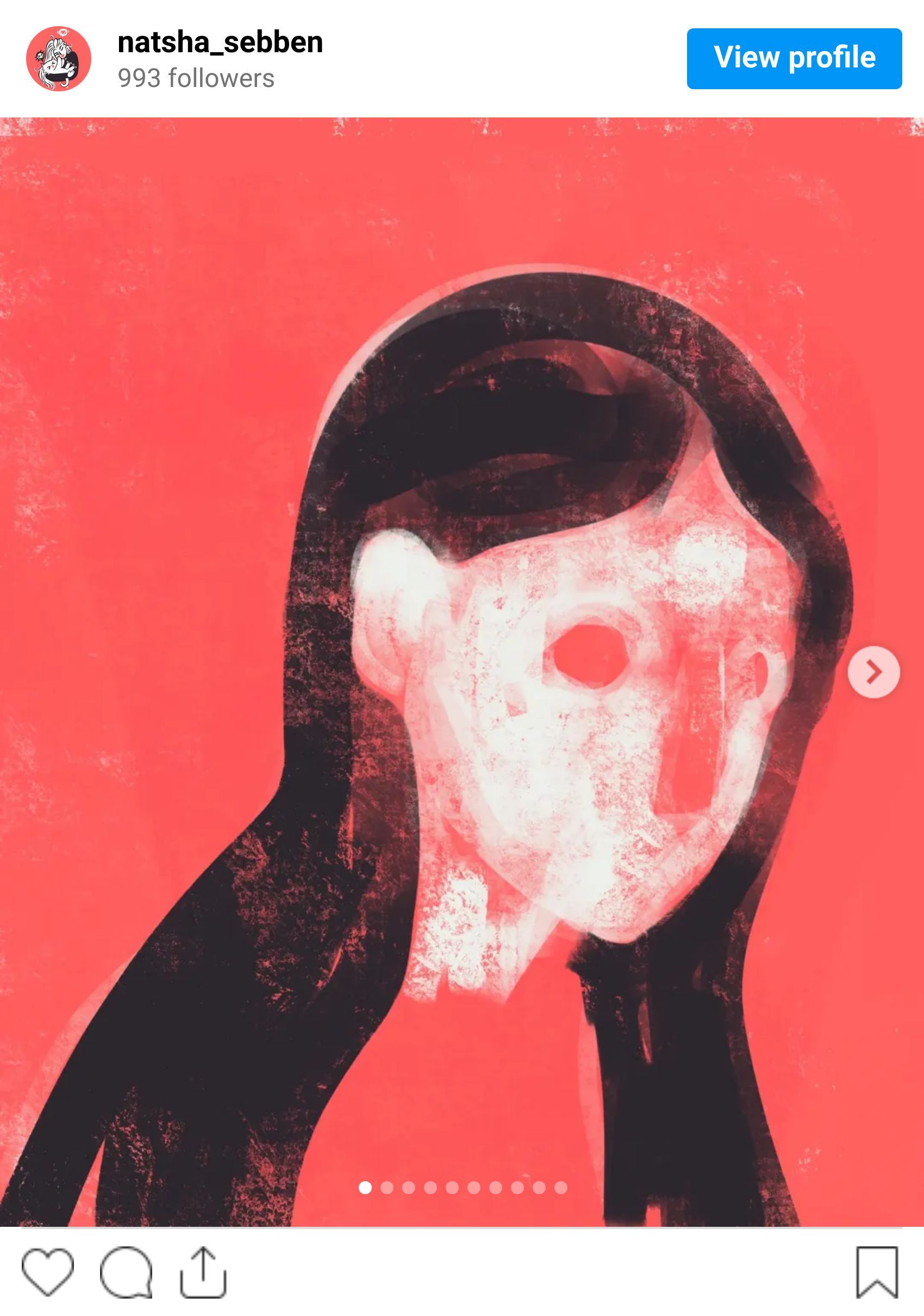
The visual art displayed on your Instagram explore a variety of visual styles, including a number of pieces that drift into unsettling or disturbing imagery. Can you talk about your approach to visual art and how you decide what imagery is best suited to a piece?
I’m searching for ways to visualise/speak/write about dark themes: making them accessible and creating something around them. I want to make it easier for me, and ideally also for other people, to interact and think about things we usually do not want to interact with or think about.
What was your pathway into making games? Was this something you always wanted to pursue?
I was torn between game design and animation for a long time. I was (and still am) looking for my preferred way of telling stories and sharing experiences. My game design studies then provided most of the tools I needed to feel some sort of readiness to start making games. However, my imposter syndrome is still going strong.

What led you to founding your own game design studio, natsha? What are some of the goals you have for the studio?
“natsha” was created for my freelance work as a writer/narrative designer/illustrator during my studies. After “Psychotic Bathtub” received some funding, the studio was kind of annexed and became the game’s birthplace. My main goal for the future is to create more games, stories, and animations about dark and therefore often stigmatised themes.
Psychotic Bathtub is your first game as a studio. What was the initial creative inspiration for this game and how did you kickstart development?
“Psychotic Bathtub” was my bachelor project. Some key inspirations were “Disco Elysium” by ZA/UM (Rest In Peace), the book “Die Welt im Rücken” by Thomas Melle, and “L’enfer” by Stromae. On top of that came the experiences I’ve had through my family history, which provided enough anger at society to keep writing.

Psychotic Bathtub (coming soon)
Although not a horror game, per se, Psychotic Bathtub is wrapped in a horror aesthetic in both its narrative and visual design. How does this layering of dark imagery support the game’s exploration of mental health?
The dark imagery is a crucial part of “Psychotic”: I’m trying to create a representation of Ophelia’s (“Psychotic’s” protagonist) state of mind, thoughts, and feelings. These are at times very dark, strange, and twisted, but can also burst into blissful hope, unhinged fun, and sweet melancholy.
The game uses a fictional psychological disorder. Why did you decide to use a fictional disorder instead of a real-world one?
“Psychotic Bathtub” references symptoms of several real-world disorders and creates a fictional condition, since a “true” or “realistic” simulation of, for example, a psychotic- or bipolar disorder is – for me – nearly impossible to create and not what the game is striving to be. Experiences and symptoms can vary, change and feel completely different from person to person, from minute to minute. With “Psychotic” I’m trying to create accessibility, understanding and a sense of belonging – ideally even destigmatisation – regarding different life-realities and conditions.

Psychotic Bathtub
The game takes place in the compact space of a bathtub. What is the value in presenting a game narrative in such a small, compact space?
The initial idea of limiting “Psychotic” to a very small environment was to demonstrate that strong narratives don’t need massive spaces to unfold: the bathtub becomes a melting pot, fueled by a multi-linear structure with many, many endings. What drew me towards this setting was the possibility to work with an ever-changing perception of that space, which fittingly fed into “Psychotic’s” gameplay.
The games industry has faced a number of challenges in recent years, from layoffs to lack of funding. It doesn’t seem to matter if you work at a major company or an indie studio. Times are hard. How do you remain resilient as game designers in these challenging times?
I don’t. The state of the industry worries me. The state of the world worries me. I feel like the best thing I can do is accept that apprehension, and remind myself that my profession is a privilege (most of the time), which gives me the possibility to hopefully create something “good.” Working on “Psychotic” often feels like fighting back, and that provides me with a sense of efficacy.

Psychotic Bathtub
How can folks keep updated and support the development of Psychotic Bathtub or your work in general?
Joining Psychotic’s discord server is one of the best ways to stay updated on the development and wishlisting of course helps us a lot. When it comes to general updates regarding Psychotic or my work, Instagram is a good place to tune in.
Are there any horror games, movies, or books that have particularly inspired you lately?
I've been obsessed with ghost stories since I read The Haunting of Lamb House by Joan Aiken. The sculpture “Tell my mother not to worry (ii)” by Ryan Gander, and basically everything Cornelia Parker (a sculpture and installation artist) created, are highly inspiring to me.
Thank you for reading and spending a little of your precious time with me! If you’d like to support my work, you can subscribe for free or, if you are a generous soul, you can buy me a coffee.
I make games! You can play some for free on Itch. If you’re a game developer looking for a writer or narrative designer, please check out my portfolio.
I also write poetry! Find my books here.
Reply